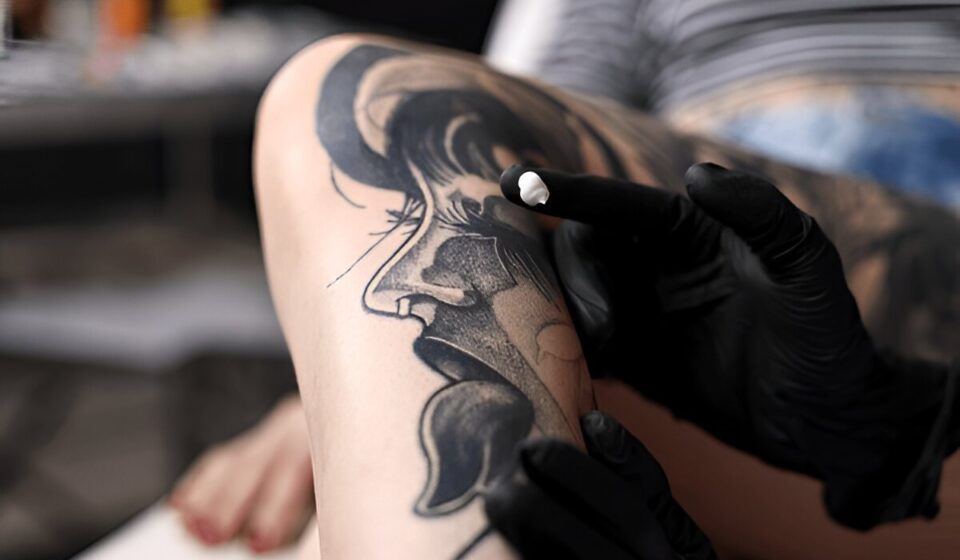
Yes, numbing cream can work for tattoos. It can reduce the sharp feeling of the needle and make a tattoo session easier to handle, but it usually does not remove every sensation.
Table Of Content
- Does Numbing Cream Work for Tattoos?
- How Does Tattoo Numbing Cream Work?
- What Ingredients Are Used in Numbing Cream?
- How Long Does Numbing Cream Work for Tattoos?
- Does Numbing Cream Work Better on Some Tattoo Areas?
- Does Numbing Cream Work for Finger Tattoos?
- Does Numbing Cream Work for Hand Tattoos?
- Can Numbing Cream Affect Tattoo Quality?
- Is Numbing Cream Safe for Tattoos?
- Possible Side Effects
- Is Numbing Cream Bad for Tattoos?
- How to Use Numbing Cream Before a Tattoo
- Before Your Tattoo Appointment
- Can You Use Numbing Cream During a Tattoo?
- Does Numbing Cream Work for Tattoo Removal?
- Tattoo Pain With Numbing Cream vs. Without It
- Does Numbing Cream Work for Back Tattoos?
- Quick Checklist Before Using Tattoo Numbing Cream
- FAQs About Tattoo Numbing Cream
- Does numbing cream completely stop tattoo pain?
- Does tattoo numbing cream actually work?
- How long does numbing cream work for tattoos?
- Does numbing cream work for finger tattoos?
- Does numbing cream work for back tattoos?
- Is numbing cream bad for tattoos?
- Can I use numbing cream during a tattoo session?
- Should I tell my tattoo artist I used numbing cream?
- Final Answer: Does Numbing Cream Work for Tattoos?
How well it works depends on the product, the tattoo location, your skin, and how the product is used. You may still feel pressure, vibration, heat, or a scratching sensation even when the skin feels noticeably less sensitive.
If you are wondering does numbing cream work for tattoo pain, the short answer is yes for many people. The important part is knowing what it can actually do, how long the effect may last, and when using it could create problems for your skin or the tattooing process.
Does Numbing Cream Work for Tattoos?
Numbing cream can reduce pain from tattooing by temporarily lowering sensation in the skin. Many topical numbing products contain a local anesthetic such as lidocaine, which reduces the ability of nerves in the treated area to send pain signals.
This does not mean the tattoo becomes completely painless. A tattoo needle repeatedly enters the skin, so you can still notice pressure, vibration, heat, or a dull scratching feeling.
For some people, the biggest difference is at the beginning of the appointment. The first part of a tattoo can feel sharp, especially during outlining. If the numbing effect is strong enough, that initial sensation may feel much easier to tolerate.
The result is not identical for everyone. A product that works well for one person may feel much less effective for another person, and the location of the tattoo also makes a difference.
How Does Tattoo Numbing Cream Work?
Tattoo numbing cream works by temporarily reducing nerve sensitivity in the skin where it is applied. The active ingredient is absorbed into the upper layers of the skin and decreases the sensation of pain in that area.
Most people are not completely numb after using a topical anesthetic. Instead, the sharpness of the sensation is reduced. This is why you may still notice the tattoo needle moving across your skin even when the pain feels much lower.
What Ingredients Are Used in Numbing Cream?
Different products use different active ingredients and strengths. Depending on the product, you may see ingredients such as:
- Lidocaine: a common local anesthetic used to reduce skin sensation.
- Benzocaine: another topical anesthetic found in some products.
- Prilocaine: used in some topical anesthetic formulas.
- Tetracaine: found in certain topical anesthetic products.
Do not assume that a higher percentage means a better product. Strength, formulation, application method, and the amount of skin being treated all matter. Using more than directed can increase the risk of unwanted effects.
How Long Does Numbing Cream Work for Tattoos?
There is no single amount of time that applies to every tattoo numbing cream. The duration depends on the active ingredient, product formulation, how it is applied, the tattoo location, and your individual response.
Some products may provide noticeable numbing for part of a tattoo appointment, while the effect may wear off sooner for other people. Always check the product label rather than assuming that a cream will last for a specific number of hours.
This becomes more important during long tattoo sessions. A product may make the first part of the appointment easier but become less noticeable as the session continues.
When the effect starts to fade, you may suddenly become more aware of the tattoo sensation. That does not necessarily mean something is wrong. It can simply mean that the numbing effect is wearing off.
Do not automatically reapply numbing cream during a tattoo. Tattooing breaks the skin, and applying topical anesthetics to broken skin can change how much of the ingredient is absorbed. If you are considering reapplication, follow the product instructions and ask your tattoo artist first.
Does Numbing Cream Work Better on Some Tattoo Areas?
Yes. The location of a tattoo can make a noticeable difference in how painful the experience feels and how useful numbing cream may be.
Numbing cream tends to be most helpful when it reduces sharp surface discomfort. Areas with thin skin, little padding, or many sensitive nerve endings can still be uncomfortable even when the cream works.
| Tattoo Area | What to Expect | How Numbing Cream May Help |
|---|---|---|
| Ribs | Often very sensitive | May reduce the sharp surface sensation, but pressure and vibration can remain noticeable. |
| Spine | Can be quite uncomfortable | May make the beginning of the session easier, although vibration may still be strong. |
| Inner arm | Usually more sensitive than the outer arm | May take the edge off during linework and shading. |
| Ankle | Thin skin and little padding | May reduce some of the sharper sensation near the bone. |
| Back | Varies depending on location | May make longer sessions more comfortable, although the effect may not last for the entire appointment. |
| Hand and fingers | Often sensitive | May reduce some discomfort, but these areas can remain painful because of thin skin and many nerve endings. |
Does Numbing Cream Work for Finger Tattoos?
It can help with finger tattoos, but it may not make them comfortable. Finger skin is relatively thin and the area has many sensitive structures close to the surface.
You may notice less of the sharp needle sensation after using a suitable numbing product, but pressure and vibration can still be noticeable. Finger tattoos can also be challenging because the skin moves frequently and the tattoo area is small.
If you are getting a finger tattoo, tell your artist that you are considering numbing cream before applying anything. Some artists prefer to work without it, while others are comfortable with certain products.
Does Numbing Cream Work for Hand Tattoos?
Yes, numbing cream may reduce some of the discomfort from a hand tattoo. However, hands can still be sensitive even when the skin has been numbed.
The result can also vary depending on where the tattoo sits. The top of the hand, fingers, knuckles, and areas close to bone may all feel different during tattooing.
If you are planning a hand tattoo, your artist should know what product you plan to use before the appointment. The condition of the skin matters just as much as the numbing effect.
Can Numbing Cream Affect Tattoo Quality?
It can, depending on the product and how the skin reacts to it.
Some numbing products can temporarily change the way the skin feels or behaves. Swelling, moisture, firmness, or changes in skin texture may make the tattoo harder to work on.
This is one reason some tattoo artists prefer clients not to use numbing cream. Other artists are comfortable using certain products when they know exactly what was applied and when it was used.
Using numbing cream does not automatically ruin a tattoo. The final result depends on the artist, the skin, the tattoo placement, the product, and how the appointment is handled.
If your artist has a preferred product or does not allow numbing cream, follow their instructions. They are working directly with your skin and need to know what has been applied before the tattoo begins.
Is Numbing Cream Safe for Tattoos?
Numbing cream is not automatically unsafe, but topical anesthetics need to be used carefully. Problems are more likely when a product is too strong, applied too heavily, used over a large area, left on for too long, or used on irritated or broken skin.
The U.S. Food and Drug Administration has warned consumers about certain topical pain relief products marketed for tattooing and other cosmetic procedures. Some products have contained high concentrations of lidocaine or have been promoted for use in ways that can increase absorption through the skin.
The FDA has specifically warned about applying these products heavily over large areas, using them on irritated or broken skin, leaving them on for prolonged periods, or covering treated skin with plastic wrap or other dressings. These practices can increase absorption and may cause serious health problems. :contentReference[oaicite:1]{index=1}
For products sold in the United States, the FDA warning also says consumers should not use over-the-counter pain relief products containing more than 4% lidocaine. Product labeling and local regulations can vary, so check the label and do not assume that a product marketed specifically for tattoos is automatically safe.
Possible Side Effects
- Redness or skin irritation
- Burning or itching
- Temporary swelling
- Skin sensitivity or an unusual reaction
- Dizziness or other unusual symptoms if too much anesthetic is absorbed
Seek medical advice if you develop a significant reaction or unusual symptoms after using a topical anesthetic.
Is Numbing Cream Bad for Tattoos?
Not necessarily. The problem is usually how the product is chosen and used rather than the simple fact that a numbing cream was applied.
Some tattoo artists use or allow numbing products because they can help clients remain still during uncomfortable parts of a session. Other artists avoid them because certain formulas can affect the feel or condition of the skin.
If your artist does not want you to use numbing cream, there is usually a practical reason. They may have had problems with particular products in the past or may prefer to work with clean, untreated skin.
The safest approach is to tell your artist exactly what product you plan to use before your appointment.
How to Use Numbing Cream Before a Tattoo
If you decide to use a topical numbing product, follow the product label carefully. Do not assume that applying more will produce better results.
Before Your Tattoo Appointment
- Ask your tattoo artist first. Make sure they are comfortable with the product you plan to use.
- Read the label. Check the active ingredients, strength, directions, and warnings.
- Check your skin. Do not apply the product to broken, irritated, or inflamed skin unless a healthcare professional specifically tells you to.
- Use only the recommended amount. More product does not necessarily mean better numbing.
- Follow the stated application time. Do not leave the product on longer simply because you want a stronger effect.
- Do not cover the area unless the product instructions specifically allow it. Covering treated skin can increase absorption.
- Tell your artist what you used. They need to know what is on your skin before starting the tattoo.
If you have an allergy to local anesthetics, take medications that could interact with them, or have a medical condition that may affect how you respond to topical anesthetics, ask a healthcare professional before using one.
Can You Use Numbing Cream During a Tattoo?
Do not assume that you can safely apply more numbing cream once the tattoo has started.
During tattooing, the skin is being repeatedly punctured. That changes the situation compared with applying a product to intact skin before an appointment.
Some products are specifically marketed for use during tattooing, but marketing claims are not a substitute for safety information. The FDA has taken action against certain products promoted for use during tattoo procedures, including products with lidocaine concentrations above permitted over-the-counter levels. :contentReference[oaicite:2]{index=2}
If the numbing effect starts to fade, talk to your tattoo artist rather than applying more product on your own.
Does Numbing Cream Work for Tattoo Removal?
Numbing cream may reduce some discomfort during tattoo removal, but laser tattoo removal is different from getting a tattoo.
Laser treatment can produce a hot, snapping sensation as the laser energy is delivered to the skin. Whether a numbing product can be used depends on the clinic, the treatment area, the product, and the condition of the skin.
If you are having laser tattoo removal, ask the clinic before applying any numbing cream. Some clinics may provide their own approved product or prefer the skin to be clean and free of topical products before treatment.
You can also read our laser tattoo removal cost guide if you are comparing treatment prices and planning your removal sessions.
Tattoo Pain With Numbing Cream vs. Without It
Without numbing cream, you feel the normal sensation of tattooing from the beginning. The experience can include sharp linework, burning during shading, vibration, and increasing irritation as the session continues.
With numbing cream, the beginning of the appointment may feel easier. The needle can feel less sharp and the overall discomfort may be easier to tolerate.
The difference is usually not that one experience feels completely painless and the other does not. It is more about reducing the intensity of the sensation.
For a short tattoo, the effect may be noticeable throughout much of the appointment. For a large tattoo filler ideas or sleeve, the effect may change before the session is finished. Breaks and a realistic plan for the appointment are still important.
If you are planning a larger tattoo, our half sleeve tattoo cost guide can also help you estimate the project before booking.
Does Numbing Cream Work for Back Tattoos?
Numbing cream may help with back tattoos, especially during outlining and other parts of the session that produce sharper surface discomfort.
The back is a large area, though, and a tattoo session can last for several hours. Even if the cream works well at first, you may notice more sensation as the effect becomes weaker.
For tattoos near the spine or shoulder blades, vibration and pressure can still be noticeable even when the skin is less sensitive.
If you are planning a large back tattoo, your artist can help you decide whether numbing cream makes sense for the particular design and session length.
Quick Checklist Before Using Tattoo Numbing Cream
- Ask your tattoo artist before using it.
- Read the active ingredients and strength on the label.
- Do not use more than directed.
- Do not apply it to broken or irritated skin.
- Do not leave it on longer than directed.
- Do not cover treated skin unless the product instructions specifically allow it.
- Tell your artist which product you used.
- Do not automatically reapply it during the tattoo.
- Stop using it and seek medical advice if you develop a significant reaction or unusual symptoms.
FAQs About Tattoo Numbing Cream
Does numbing cream completely stop tattoo pain?
No. Numbing cream can reduce the sharp sensation of tattooing, but it usually does not remove every feeling. You may still notice pressure, vibration, heat, or scratching.
Does tattoo numbing cream actually work?
Yes, it can reduce skin sensation for many people. The amount of relief varies by product, tattoo location, application, and individual response.
How long does numbing cream work for tattoos?
The duration varies by product and person. Some products may provide noticeable relief for part of a tattoo appointment, while the effect may wear off sooner for others. Always follow the product label rather than relying on a fixed number of hours.
Does numbing cream work for finger tattoos?
It may reduce some of the sharp discomfort, but finger tattoos can still be painful because the skin is thin and sensitive. Tell your tattoo artist before using any numbing product.
Does numbing cream work for back tattoos?
Yes, it may make parts of a back tattoo more comfortable. However, large back tattoos can take several hours, so the effect may not last for the entire appointment.
Is numbing cream bad for tattoos?
Not necessarily. Some artists allow it, while others prefer to work without it. Certain products can change the feel or condition of the skin, so your artist should know what you plan to use.
Can I use numbing cream during a tattoo session?
Do not reapply numbing cream during a tattoo unless your artist and the product instructions clearly allow it. Tattooing breaks the skin, which can affect how topical anesthetics are absorbed.
Should I tell my tattoo artist I used numbing cream?
Yes. Always tell your tattoo artist before the session. They need to know what has been applied to your skin so they can prepare the area correctly.
Final Answer: Does Numbing Cream Work for Tattoos?
So, does numbing cream work for tattoos? Yes. For many people, it can reduce the sharp surface sensation and make the beginning of a tattoo session easier to handle.
It is not a guarantee of a painless tattoo, though. You may still feel pressure, vibration, heat, or scratching, and the effect can become weaker during a longer appointment.
The product matters, but so does the way it is used. Check the label, avoid applying more than recommended, never assume that stronger means better, and tell your tattoo artist what you plan to use before the appointment.
When used carefully and with your artist’s knowledge, numbing cream can be one option for making an uncomfortable tattoo session easier to manage.





This article really helped me understand does numbing cream work for tattoo pain relief. The detailed explanation of how tattoo numbing creams affect sensation, application tips, and duration of effectiveness made it much clearer why many people choose to use numbing cream before a tattoo session. Great resource for anyone researching tattoo numbing cream effectiveness and how to manage pain during a tattoo.