Tattoo Removal Cost (2026): Real Prices, Per Session & Full Breakdown
Tattoo removal cost ranges from $100 to $500 per session. Full removal typically costs $1,000 to $5,000+ depending on tattoo size, ink color, skin type, and the number of laser sessions required. Most people need 6–12 sessions spaced 6–8 weeks apart.
Table Of Content
- What Affects Tattoo Removal Cost?
- How Much Does It Cost to Get a Tattoo Removed?
- Average Tattoo Removal Cost by Size
- Small Tattoo Removal Cost
- Medium Tattoo Removal Cost
- Large Tattoo Removal Cost
- Laser Tattoo Removal Cost Per Session
- How Many Sessions Does Laser Tattoo Removal Need?
- What Happens After 1 Session?
- Total Cost of Full Tattoo Removal
- Tattoo Removal Cost Estimate by Inch Size
- Tattoo Removal Cost by Location
- Pico Laser Tattoo Removal Cost
- How Ink Color Affects Removal Cost
- Tattoo Removal Cost vs. Cover-Up Tattoo
- Does Tattoo Removal Hurt?
- Laser Tattoo Removal Aftercare
- Tattoo Removal Financing and Insurance
- How to Reduce Tattoo Removal Costs
- Is Tattoo Removal Worth the Cost?
- Final Thoughts on Tattoo Removal Cost
- Reviewed by Jessica Reed
- How many sessions are needed for tattoo removal?
- What is the average laser tattoo removal cost and why is it expensive?
- Does laser tattoo removal hurt?
- Is pico laser tattoo removal more expensive?
- Can a tattoo be removed completely and what is the permanent tattoo removal price?
- What factors affect the total cost to remove a tattoo?
- Is tattoo removal worth the cost?
- Does insurance cover tattoo removal?
- How much does tattoo removal cost near me?
- How long does tattoo removal take in total?
- Is it cheaper to get a cover-up or remove a tattoo?
What Affects Tattoo Removal Cost?
Tattoo removal cost varies because every tattoo is different. Size, ink color, skin tone, tattoo age, and the laser technology used all influence how many sessions you need — and how much you ultimately pay. Understanding these factors before booking a clinic can save you hundreds of dollars.
- Tattoo size: Larger tattoos require more laser passes and more time per session.
- Ink color: Black and dark blue respond fastest. Red, green, and yellow require more sessions.
- Skin type (Fitzpatrick scale): Lighter skin tones allow higher laser settings, speeding up results. Darker skin may require a more cautious approach to avoid pigmentation changes.
- Placement: Areas with strong blood circulation (chest, upper back) heal faster than extremities (fingers, ankles).
- Tattoo age: Older tattoos have already faded over time and often need fewer sessions.
- Ink density: Professional tattoos go deeper and use more pigment than amateur ones.
- Technology used: Picosecond lasers (PicoSure, PicoWay) typically cost 20–40% more per session than older Q-switched lasers but may require fewer sessions overall.
Pro tip: Choosing a cheaper clinic with outdated equipment can lead to more sessions — costing you more in the long run. Always ask what laser model the clinic uses before committing.
How Much Does It Cost to Get a Tattoo Removed?
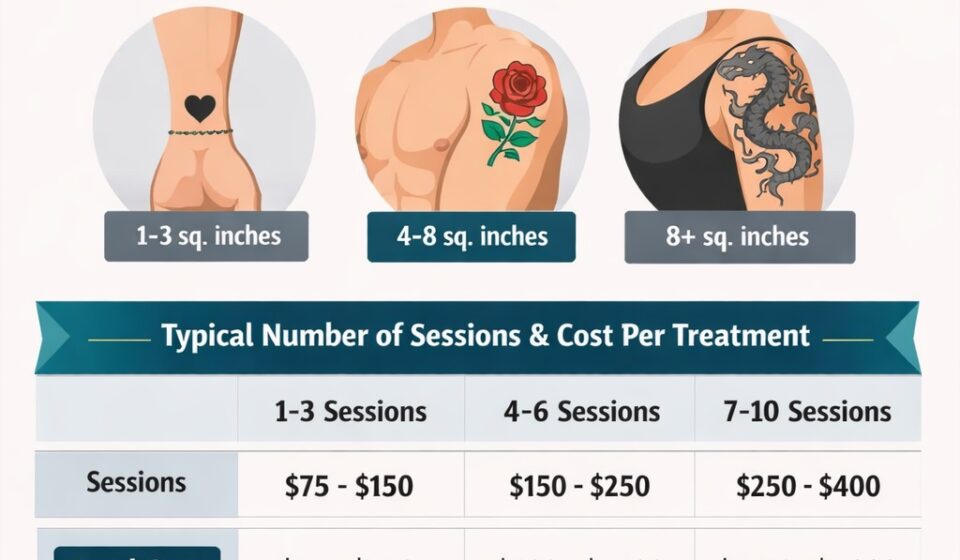
The average tattoo removal cost per session depends on tattoo size, ink colors, and the laser technology used. Below is a realistic breakdown of what most people pay in 2026 at U.S. clinics. Prices in major cities (New York, Los Angeles, Chicago, Miami) tend to run 15–30% higher than suburban or smaller-market clinics.
- Small tattoo (1–3 sq. in.): $100 – $250 per session
- Medium tattoo (4–8 sq. in.): $250 – $400 per session
- Large tattoo (8+ sq. in.): $400 – $500+ per session
- Full removal total: $1,000 – $5,000+
| Tattoo Size | Cost Per Session | Estimated Sessions | Total Cost |
|---|---|---|---|
| Small (1–3 sq. in.) | $100 – $250 | 5 – 8 | $1,000 – $2,000 |
| Medium (4–8 sq. in.) | $250 – $400 | 6 – 10 | $2,000 – $4,000 |
| Large (8+ sq. in.) | $400 – $500+ | 8 – 12 | $4,000 – $6,000+ |
If you want to see real fading results before deciding, check our tattoo removal before and after guide. You can also explore the full tattoo removal category for healing advice and realistic expectations.
Average Tattoo Removal Cost by Size
Tattoo size is the single biggest driver of removal cost. Here is what to realistically expect at each size tier.
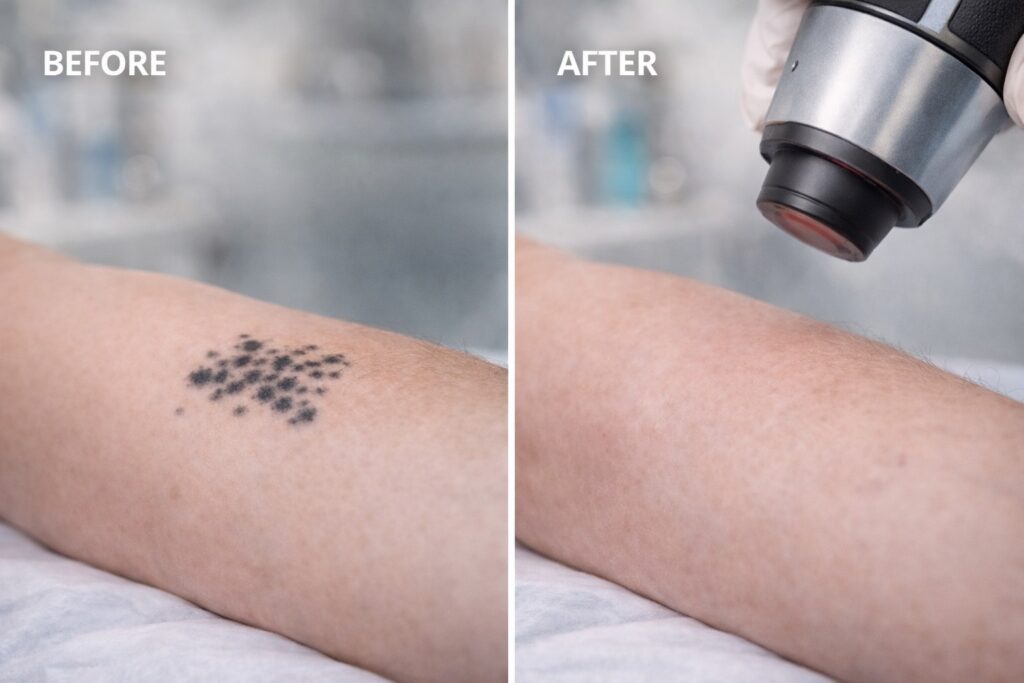
Small Tattoo Removal Cost
Small tattoos (roughly the size of a coin or a simple word) cost $100–$250 per session. An older, black-ink small tattoo is the easiest and cheapest to remove — full clearance can happen in as few as 4–6 sessions, keeping the total cost under $1,500 in many cases.
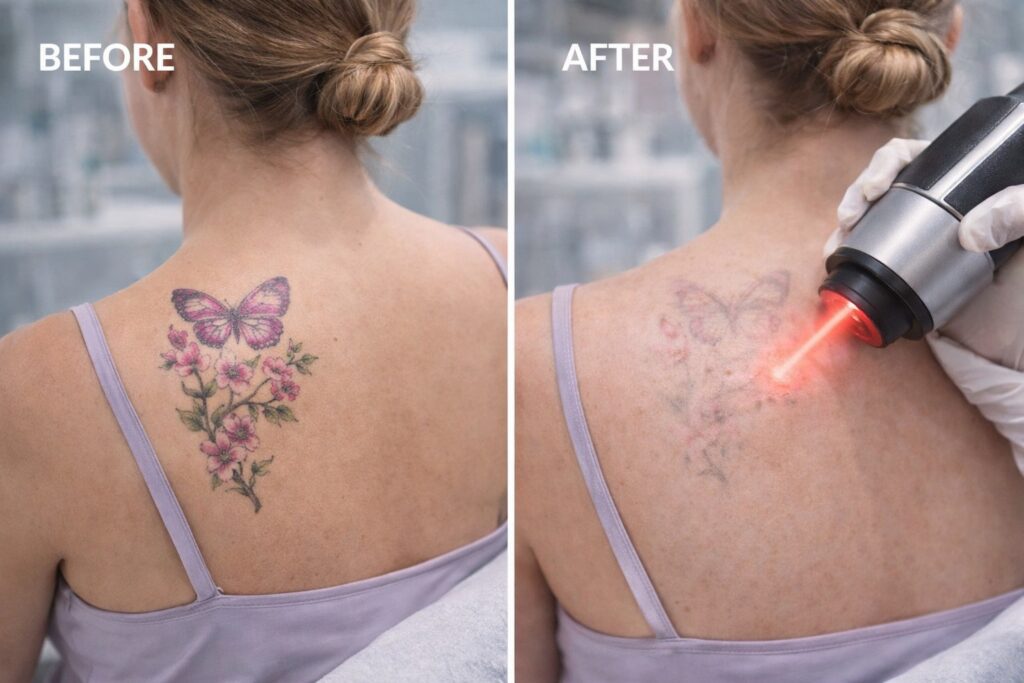
Medium Tattoo Removal Cost
Medium tattoos — script pieces, palm-sized designs, medium symbols — cost $250–$400 per session. Expect 6–10 sessions for full removal, making the total investment typically $2,000–$4,000.
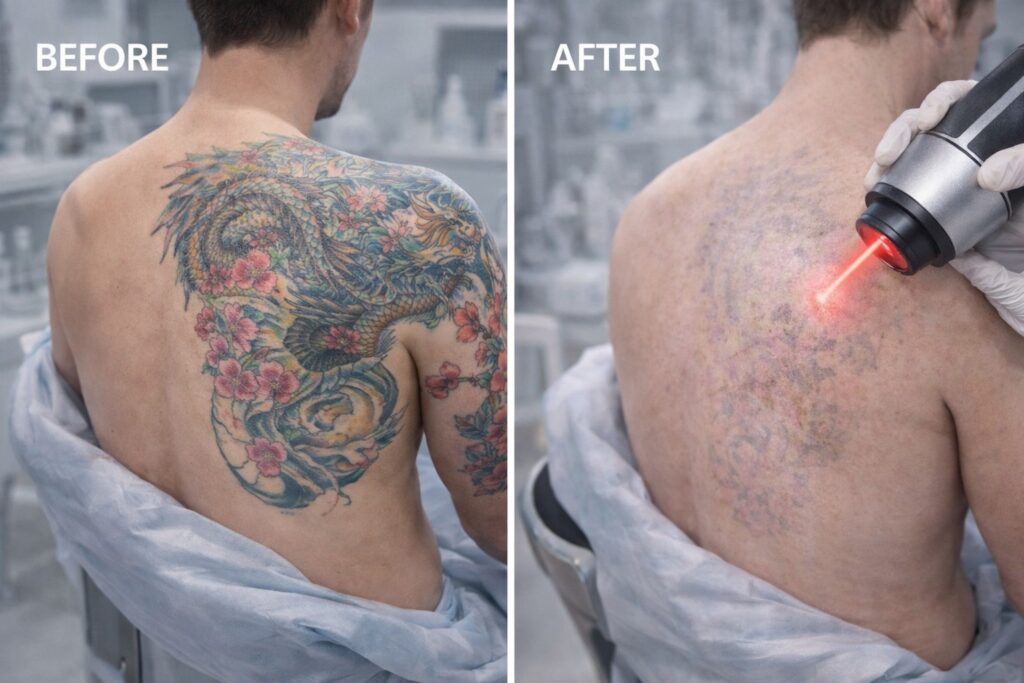
Large Tattoo Removal Cost
Large tattoos, partial sleeves, or dense multi-color pieces cost $400–$500+ per session. These designs often need 8–12 sessions, and the total cost can reach $4,000–$6,000 or more — especially if multiple ink colors are involved.
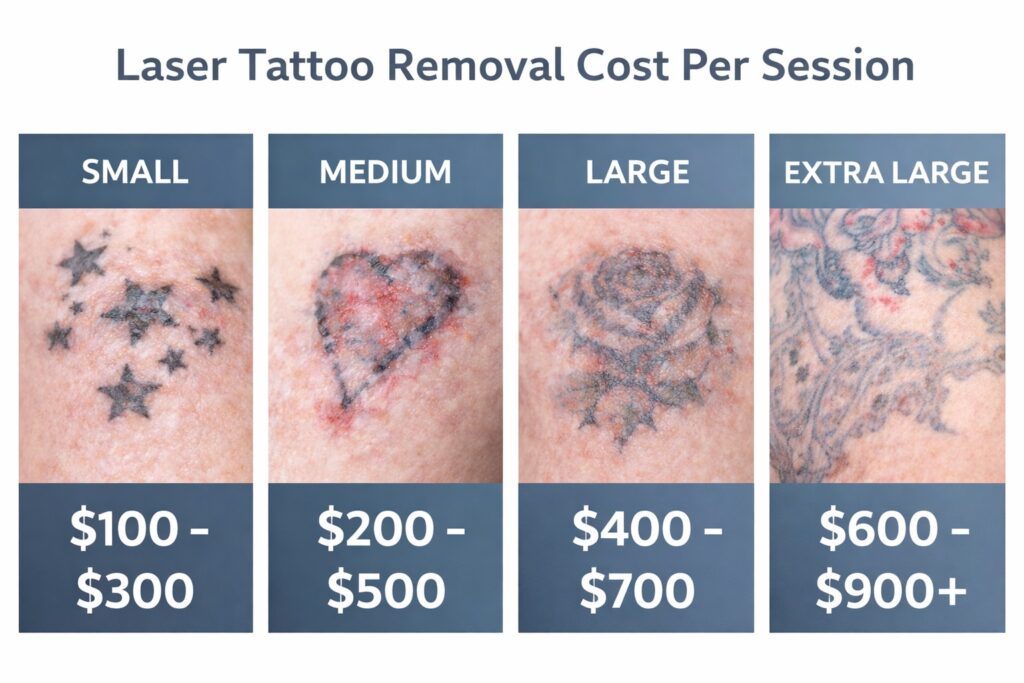
Laser Tattoo Removal Cost Per Session
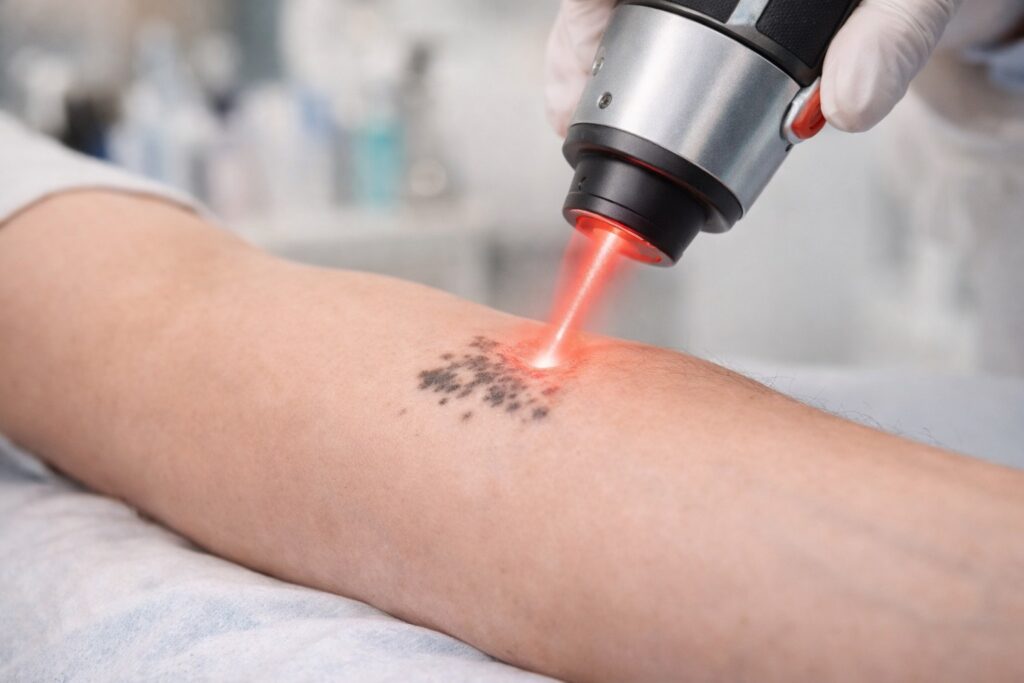
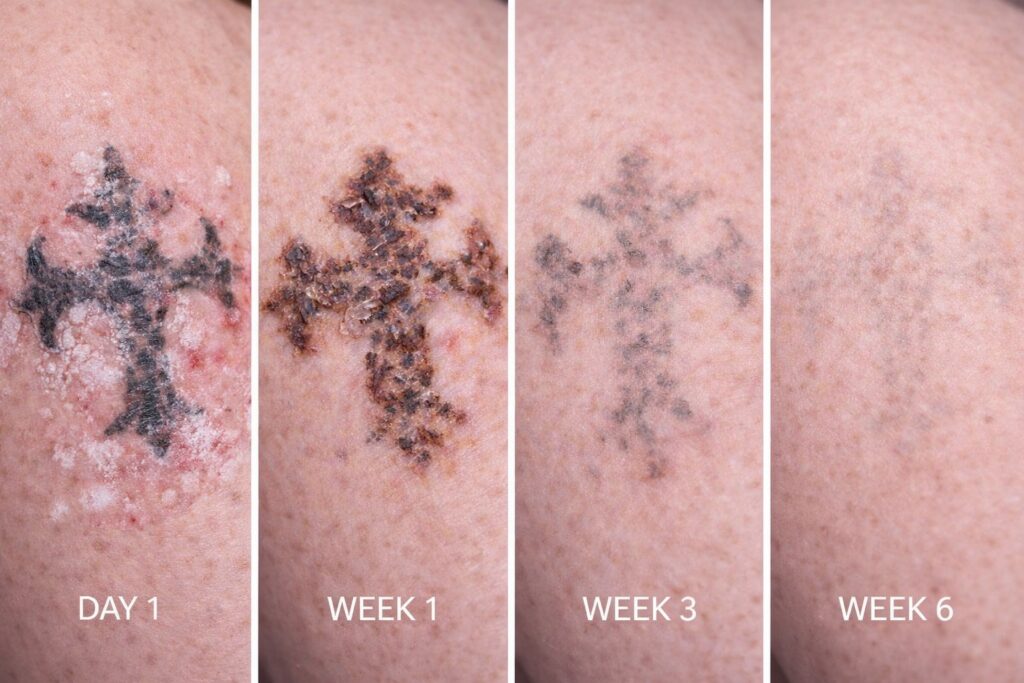
Laser tattoo removal cost per session is the pricing model used by most clinics. Sessions are spaced 6 to 8 weeks apart to allow the skin to heal and your immune system to flush out the shattered ink particles between visits.
- Older tattoos often fade faster and need fewer sessions
- Black ink responds best to all laser wavelengths
- Colored tattoos (especially green, yellow, light blue) require specific laser wavelengths and cost more overall
- Dense professional tattoos may need 2–3 more sessions than amateur ink
How Many Sessions Does Laser Tattoo Removal Need?
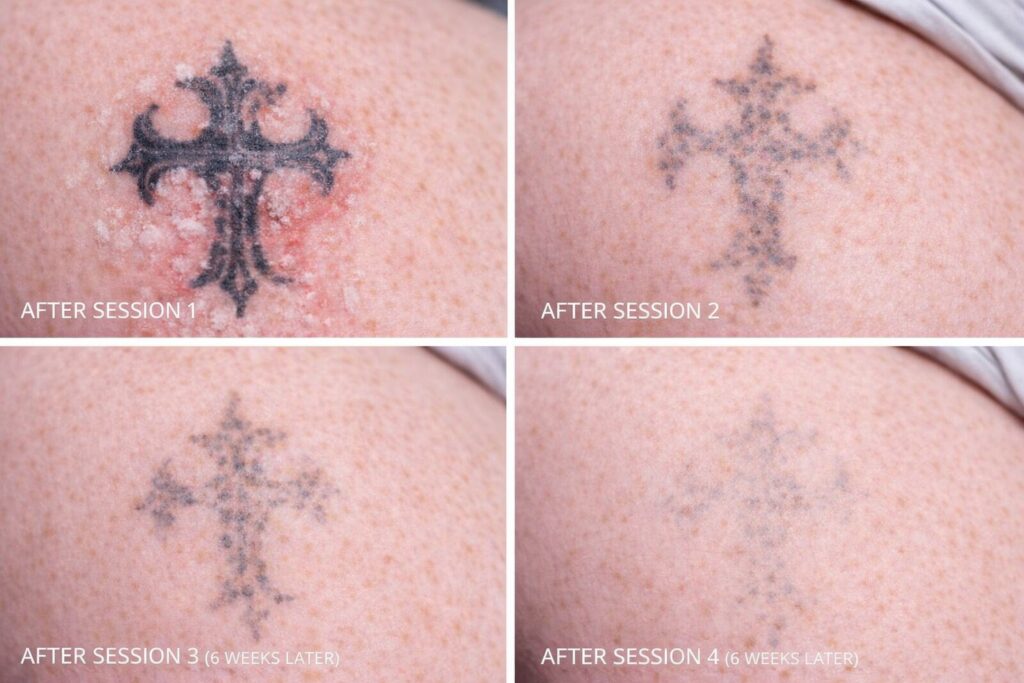
Most people need 6 to 12 sessions for full removal. Lighter tattoos and amateur ink can clear in 4–6 sessions. Very dense, professionally applied, or multi-color tattoos may require 12–15 sessions. For a deeper look at the timeline, see our guide on how many sessions tattoo removal takes.
What Happens After 1 Session?
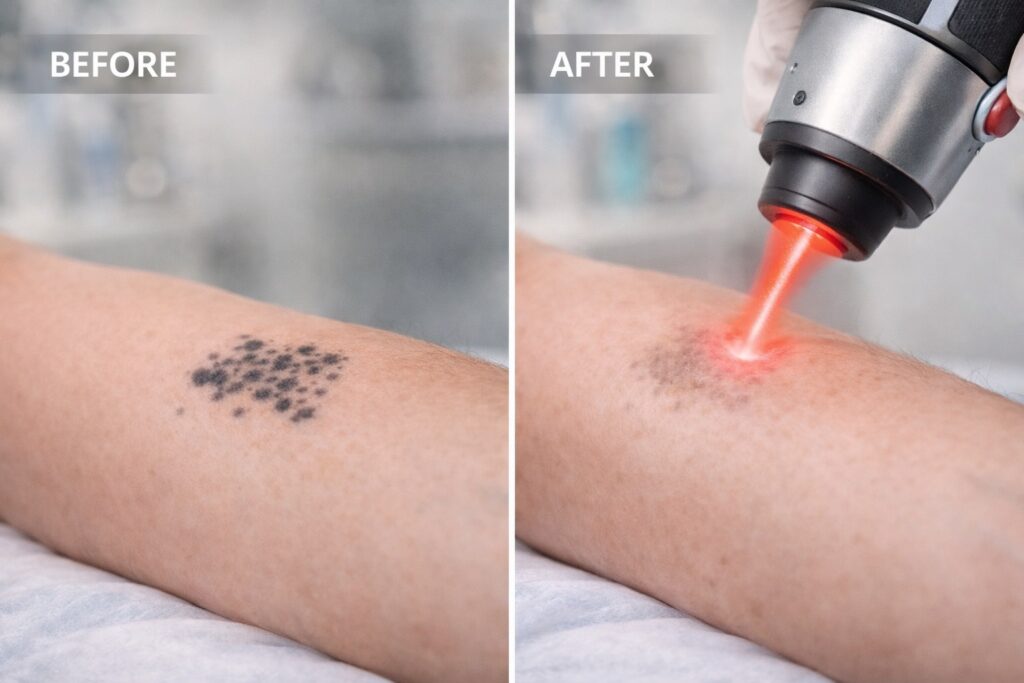
After a single session, most tattoos show only partial fading — roughly 10–30% of the ink is broken down. Significant visible clearing typically starts becoming obvious after sessions 3–4. For realistic visual examples, visit our tattoo removal before and after gallery.
Total Cost of Full Tattoo Removal
The total cost of full tattoo removal combines session price × number of sessions needed. Here is a realistic estimate for 2026:
- Simple black tattoo: $1,000 – $2,000
- Moderate multi-color tattoo: $2,000 – $4,000
- Large or heavily colored tattoo: $4,000 – $6,000+
These are averages. Your final cost depends on ink depth, skin response, clinic pricing, and whether you choose standard or picosecond laser treatment.
Tattoo Removal Cost Estimate by Inch Size
Use this size-based guide to get a ballpark figure before your clinic consultation:
- 1–2 inch tattoo: $1,000 – $1,800 total
- 3–5 inch tattoo: $1,800 – $3,500 total
- Large forearm or shoulder piece: $3,500 – $6,000+
Your actual price can go up or down based on ink depth, tattoo age, skin tone, clinic technology, and how your immune system responds between sessions.
Tattoo Removal Cost by Location
Tattoo removal cost near you depends heavily on your city and local market. Clinics in New York, Los Angeles, Miami, Chicago, and London typically charge 15–30% more than clinics in smaller cities or suburban areas — driven by higher operating costs and demand for newer laser technology.
If budget is a concern, it can be worth calling clinics in nearby suburbs or smaller towns. You may get access to the same laser equipment at a lower per-session price. Always verify the laser model used (PicoSure, PicoWay, RevLite, etc.) before choosing based on price alone.
Pico Laser Tattoo Removal Cost
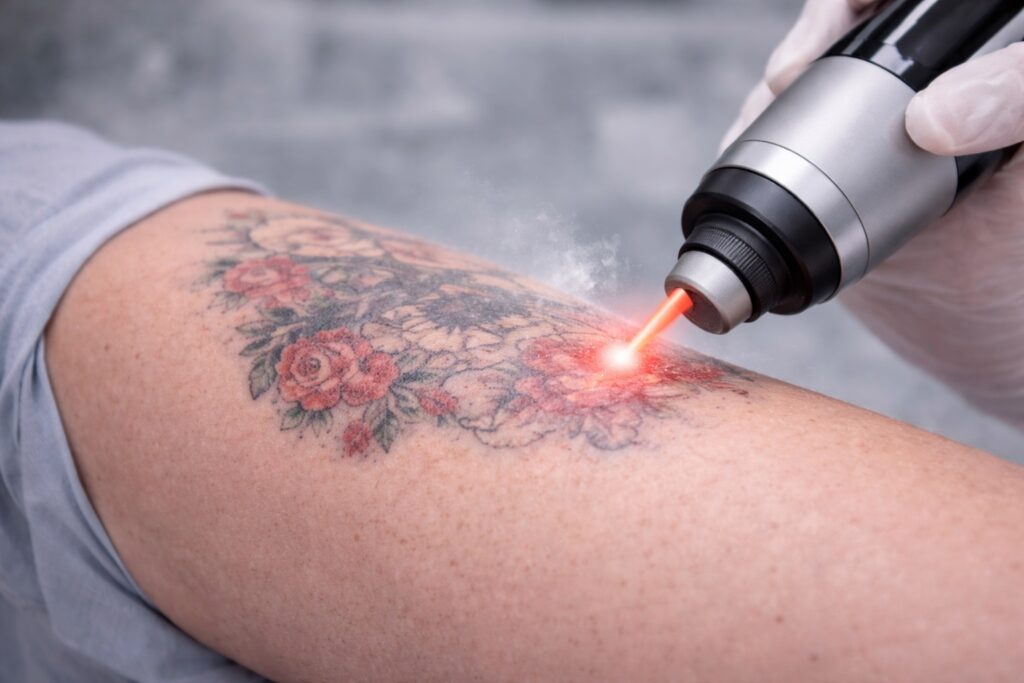
Pico laser tattoo removal (PicoSure, PicoWay, Enlighten) uses ultra-short pulses — measured in picoseconds — to shatter ink into smaller particles than traditional Q-switched nanosecond lasers. This generally means fewer total sessions, which can offset the higher per-session cost.
Pico sessions typically cost 20–40% more per visit than Q-switched sessions. However, if pico technology reduces your total sessions from 10 to 7, the overall cost can be comparable or even lower. According to the American Academy of Dermatology, no laser completely removes all tattoos in all people — realistic expectations are important before starting treatment.
How Ink Color Affects Removal Cost
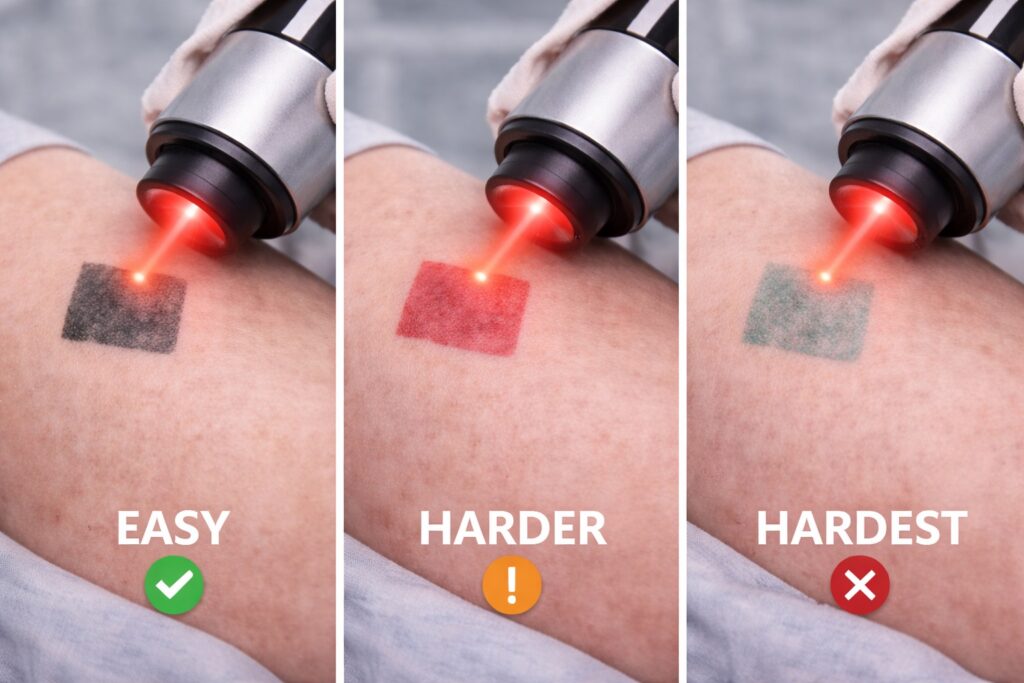
Not all ink colors respond the same way to laser energy. This directly impacts how many sessions — and how much money — your removal will require.
- Black & dark navy: Easiest to remove. Absorbs all laser wavelengths. Fewest sessions needed.
- Red & orange: Responds well to specific wavelengths (532nm). Usually moderate difficulty.
- Green & light blue: Among the hardest colors. Requires 755nm or 694nm wavelengths, available only on select lasers.
- Yellow & white: Most resistant. Can sometimes darken after treatment before fading. May never fully clear.
Tattoo Removal Cost vs. Cover-Up Tattoo
A cover-up tattoo typically costs $200–$600 for a small to medium piece and can be done in a single appointment — making it significantly cheaper upfront than full laser removal. However, a cover-up does not remove the original tattoo. It only hides it with a new design, which must be darker and larger than the original.
Many people choose partial laser removal first (3–5 sessions to significantly fade the original) before getting a cover-up. This gives the tattoo artist more creative freedom and produces a much better result. That partial-fading approach may cost $500–$1,500, far less than full removal.
| Option | Typical Cost | Result | Best For |
|---|---|---|---|
| Cover-up tattoo | $200–$600+ | Hides old ink | Budget-conscious, design flexibility ok |
| Partial laser + cover-up | $700–$2,500 | Faded base + new design | Best visual outcome at mid cost |
| Full laser removal | $1,000–$6,000+ | Clear skin | Want completely clean slate |
Does Tattoo Removal Hurt?
Yes — laser tattoo removal causes discomfort, but most people describe it as manageable. The sensation is often compared to a rubber band snapping against the skin, repeated quickly across the tattoo area. Sessions are short (5–20 minutes depending on size), which limits overall discomfort.
Pain varies by body location. Bony areas (ribs, spine, ankles, hands) and thin-skinned zones hurt more than fleshy areas. Most clinics offer topical numbing cream (applied 30–45 minutes before treatment) and some use a cold-air cooling device during the procedure. Ask about these options — numbing cream typically adds $15–$40 per session.
Laser Tattoo Removal Aftercare
Proper aftercare directly affects how quickly you heal between sessions — which affects your total cost. Good aftercare means fewer complications, less downtime, and more consistent fading progress.
- Keep the treated area clean and dry for 24–48 hours
- Apply a thin layer of healing ointment (fragrance-free) as directed
- Avoid direct sun exposure — use SPF 30+ on the treated area once healed
- Do not pick blisters or scabs — this increases scarring risk
- Stay hydrated and avoid smoking — both improve immune flushing of ink particles
You can compare session-by-session healing and fading in our before and after tattoo removal gallery, or explore more tips in the full tattoo removal category.
Tattoo Removal Financing and Insurance
Most health insurance plans do not cover tattoo removal because it is considered a cosmetic procedure. There are rare exceptions — for example, if a tattoo is being removed as part of a documented medical treatment or gang exit program — but standard removal is almost always out-of-pocket.
To make the cost more manageable, many clinics offer:
- Session packages: Buy 6 sessions for the price of 5, for example. These are almost always worth it if you’re committed to full removal.
- Payment plans: Many clinics offer monthly installment options through CareCredit, Affirm, or in-house financing.
- Unlimited removal packages: A flat rate covering as many sessions as needed until the tattoo is gone. Best for dense or colorful tattoos with unpredictable session counts.
- First-session discounts: Many clinics offer a reduced rate on the consultation or first treatment.
How to Reduce Tattoo Removal Costs
- Get quotes from at least 3 clinics before choosing — prices vary widely for the same service
- Ask about package deals for multiple sessions upfront
- Follow aftercare instructions precisely to avoid complications that require extra sessions
- Stay out of the sun between sessions — tanned skin requires lower laser settings and more visits
- Quit smoking if possible — smokers statistically need more sessions for comparable fading
- Consider clinics in suburban areas rather than city centers for lower overhead pricing
Is Tattoo Removal Worth the Cost?
For many people, tattoo removal is absolutely worth the investment — especially when an unwanted tattoo affects confidence, professional opportunities, or future tattoo plans. The value depends entirely on your goal:
- Full clearance: Higher cost and more sessions, but results in completely clear skin
- Fading for cover-up: Much cheaper — 3–5 sessions can lighten a tattoo enough for a great cover-up design
- Partial fading: Some people are satisfied with 70–80% fading at a fraction of the full removal cost
If the tattoo is in a highly visible location (hands, neck, face) or is linked to a past identity you want to move on from, most people report that removal is one of the most worthwhile investments they’ve made.
Final Thoughts on Tattoo Removal Cost
Tattoo removal cost ranges from a few hundred dollars to several thousand — most people pay $100–$500 per session, with complete removal typically landing between $1,000 and $5,000+. The most accurate estimate comes from an in-person consultation at a reputable clinic, where a trained technician can assess your specific tattoo, skin type, and laser options.
The biggest takeaways: get multiple quotes, ask about laser technology, consider package pricing, and follow aftercare diligently. If you want to see realistic fading results before spending money, our tattoo removal before and after gallery is the best place to start.
Reviewed by Jessica Reed
Tattoo Research Contributor | Body Art & Design Specialist
Jessica Reed has spent more than a decade researching tattoo design trends, tattoo symbolism, placement strategies, tattoo aging, and artist techniques across multiple styles including fine line, blackwork, traditional, realism, and contemporary tattooing.
Her research combines information from professional tattoo artists, dermatology organizations, tattoo history resources, and long-term tattoo aging studies to help readers choose designs that remain visually successful for years to come.
Areas of expertise include:
• Tattoo design selection and planning
• Fine line and minimalist tattoo trends
• Tattoo placement strategy
• Tattoo aging and longevity
• Tattoo aftercare and maintenance
• Symbolism and cultural tattoo meanings
Last Updated: June 2026
How many sessions are needed for tattoo removal?
Most tattoos need 6 to 12 sessions for full removal. Lighter or older tattoos may clear in 4–6 sessions, while dense, colorful, or professionally applied tattoos may need 12 or more.
What is the average laser tattoo removal cost and why is it expensive?
Laser tattoo removal is expensive because clinics charge per session, most tattoos need multiple treatments, and professional laser equipment is costly to operate. Size, color, ink depth, and technology all affect the final price.
Does laser tattoo removal hurt?
Yes, laser tattoo removal causes discomfort. Most people describe it as a rubber-band snapping feeling on the skin. Sessions are short and clinics often use numbing cream or cooling devices to reduce pain.
Is pico laser tattoo removal more expensive?
Yes, pico laser tattoo removal typically costs 20% to 40% more per session than traditional Q-switched laser treatment. However, fewer total sessions may be needed, which can offset the higher per-session price.
Can a tattoo be removed completely and what is the permanent tattoo removal price?
Many tattoos can be removed almost completely, but results depend on ink color, skin type, tattoo age, and how the body responds. The permanent tattoo removal price reflects the difficulty of clearing stubborn green, yellow, and white inks.
What factors affect the total cost to remove a tattoo?
The biggest factors influencing the cost to remove a tattoo are tattoo size, ink color, number of sessions needed, skin type, clinic location, and the laser technology used.
Is tattoo removal worth the cost?
For most people, yes. Tattoo removal is worth the cost when an unwanted tattoo affects confidence, career, or future tattoo plans. Partial fading for a cover-up is a more affordable middle-ground option.
Does insurance cover tattoo removal?
Health insurance does not typically cover tattoo removal because it is considered a cosmetic procedure. Payment plans and clinic packages (such as unlimited session pricing) are the most common ways to manage the cost.
How much does tattoo removal cost near me?
Tattoo removal cost varies by location. Clinics in major cities like New York or Los Angeles tend to charge 15–30% more than suburban or smaller-market clinics. Getting quotes from at least 3 local clinics is the best way to find accurate pricing near you.
How long does tattoo removal take in total?
Full tattoo removal typically takes 1 to 2 years from start to finish, since sessions must be spaced 6–8 weeks apart for the skin to heal. Faster results are possible for small or faded tattoos.
Is it cheaper to get a cover-up or remove a tattoo?
A cover-up tattoo is cheaper upfront ($200–$600) than full removal ($1,000–$6,000+). However, partial laser fading (3–5 sessions, $500–$1,500) before a cover-up often produces the best result at a reasonable cost.