How Long Does It Take to Remove a Tattoo?
How long does it take to remove a tattoo? For most people, complete tattoo removal takes between 6 months and 2 years, requiring 6 to 12 laser sessions spaced 6 to 8 weeks apart. Smaller, older, single-color tattoos can clear in under a year. Large, multicolored, or densely saturated tattoos may take 2 years or more. This guide covers the full removal timeline, what affects treatment speed, and how to set realistic expectations before starting.
Table Of Content
- Tattoo Removal Timeline at a Glance
- How Does Laser Tattoo Removal Work?
- How Many Sessions Does Tattoo Removal Take?
- 7 Factors That Affect How Long Tattoo Removal Takes
- 1. Tattoo Size
- 2. Ink Color
- 3. Ink Depth and Density
- 4. Tattoo Age
- 5. Skin Type and Tone
- 6. Tattoo Location
- 7. Laser Technology Used
- How Long Does It Take to Remove a Small Tattoo?
- How Long Does Skin Take to Heal Between Sessions?
- Does Tattoo Removal Hurt?
- Does Tattoo Removal Leave Scars?
- Can Tattoo Removal Be Sped Up?
- Tattoo Removal vs. Cover-Up: Which Is Right for You?
- About the Author
- How long does it take to remove a tattoo completely?
- How many laser sessions are needed to remove a tattoo?
- How long does it take to remove a small tattoo?
- What is the fastest way to remove a tattoo?
- Does tattoo removal leave scars?
- How long between tattoo removal sessions?
Tattoo Removal Timeline at a Glance
| Tattoo Type | Sessions Required | Total Timeline |
|---|---|---|
| Small, single-color (black) | 4–6 sessions | 6–12 months |
| Medium, single-color | 6–8 sessions | 9–15 months |
| Large or multicolored | 8–12 sessions | 12–24 months |
| Full sleeve or cover-up | 12–15+ sessions | 18–36+ months |
Sessions are spaced 6 to 8 weeks apart — this interval is not optional. The body requires this time to clear fragmented ink particles and for the skin to heal fully before the next treatment. Shortening the interval reduces effectiveness and increases scarring risk.
Tattoo removal isn’t about erasing the past overnight — it’s a gradual process that gives your skin the time it needs to heal and move forward.
How Does Laser Tattoo Removal Work?
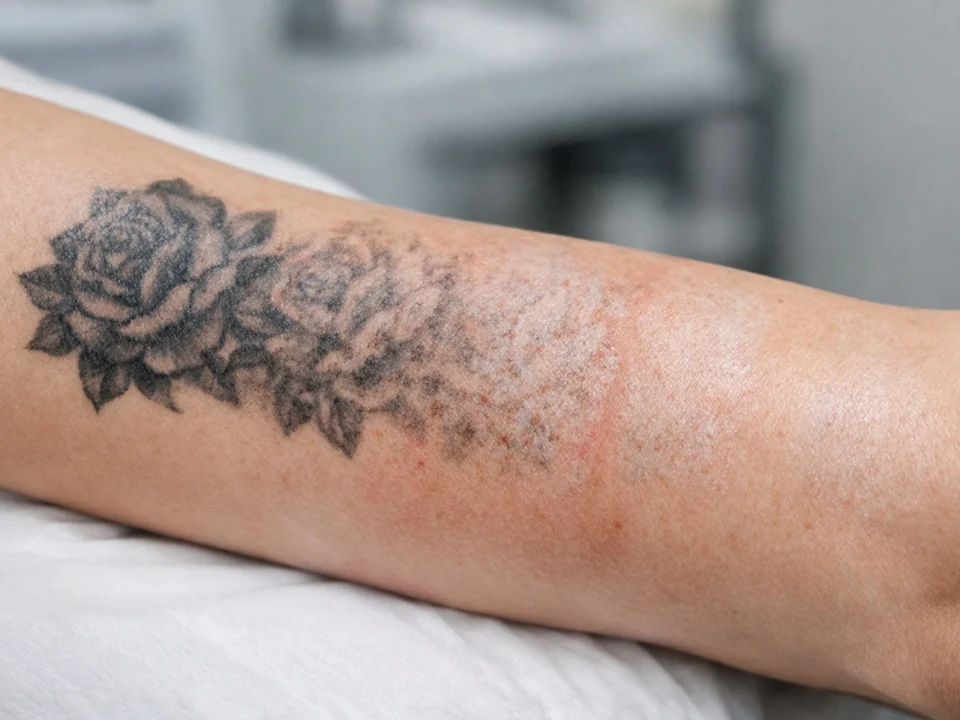
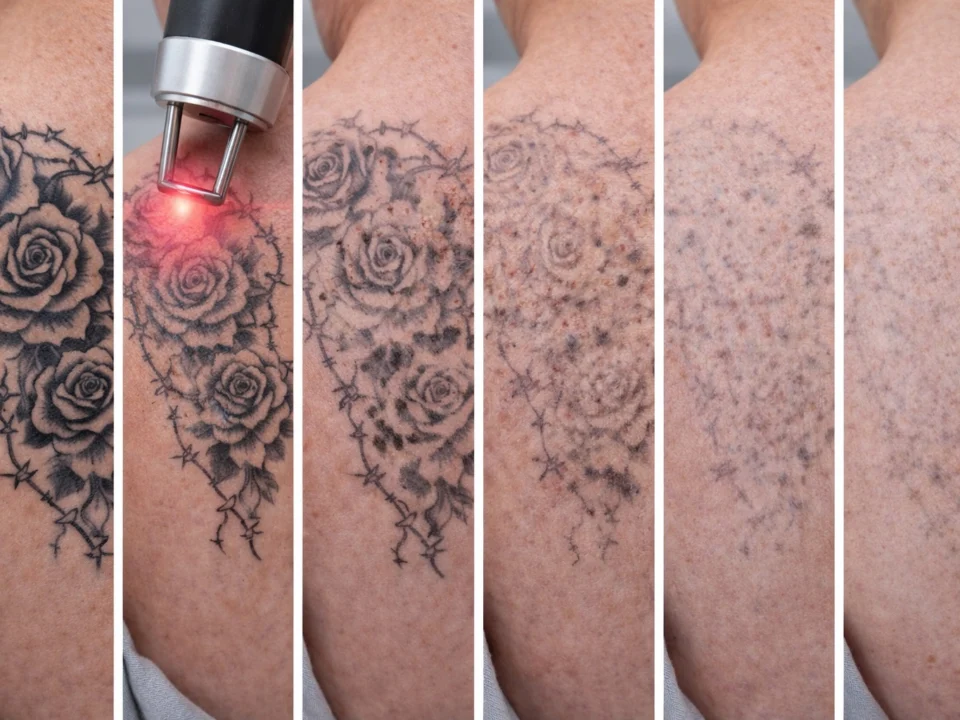
Laser tattoo removal works by directing concentrated pulses of light energy into tattooed skin. The laser targets the pigment in the ink, shattering it into microscopic fragments small enough for the body’s lymphatic system to carry away. Each session breaks down a portion of the ink — the immune system then spends the following weeks clearing what the laser fragmented.
This is why removal takes multiple sessions rather than one: the body can only process a limited amount of fragmented ink at a time, and the skin needs adequate healing time between treatments. No single session can safely remove all the ink at once without causing severe thermal damage.
The U.S. Food and Drug Administration (FDA) has cleared specific laser devices for tattoo removal — including Q-switched and picosecond laser systems — and specifies that these procedures must be performed by or under the supervision of a qualified health care professional.
How Many Sessions Does Tattoo Removal Take?
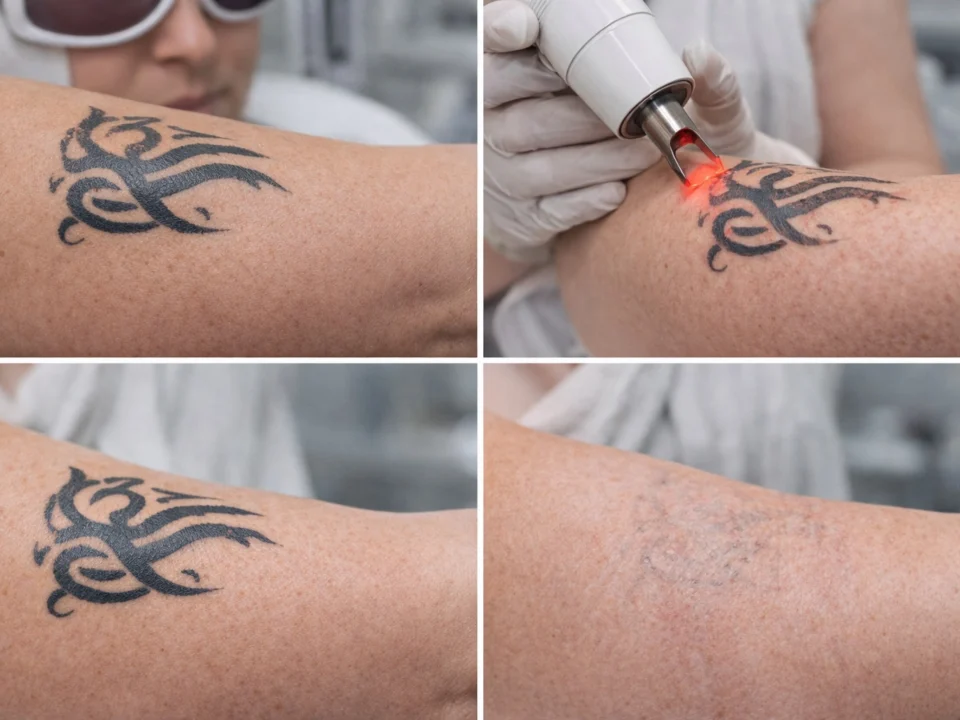
Session count is the primary driver of total removal time. Most tattoos require between 6 and 12 sessions — but this range is broad because session count depends on multiple variables that are specific to each tattoo and each individual.
A small, faded black tattoo on the upper arm may clear in 4 sessions. A large, professionally applied multicolor tattoo on the ankle may require 15 or more. The only reliable way to estimate your specific session count is an in-person consultation with an experienced removal technician or dermatologist who can assess the tattoo directly.
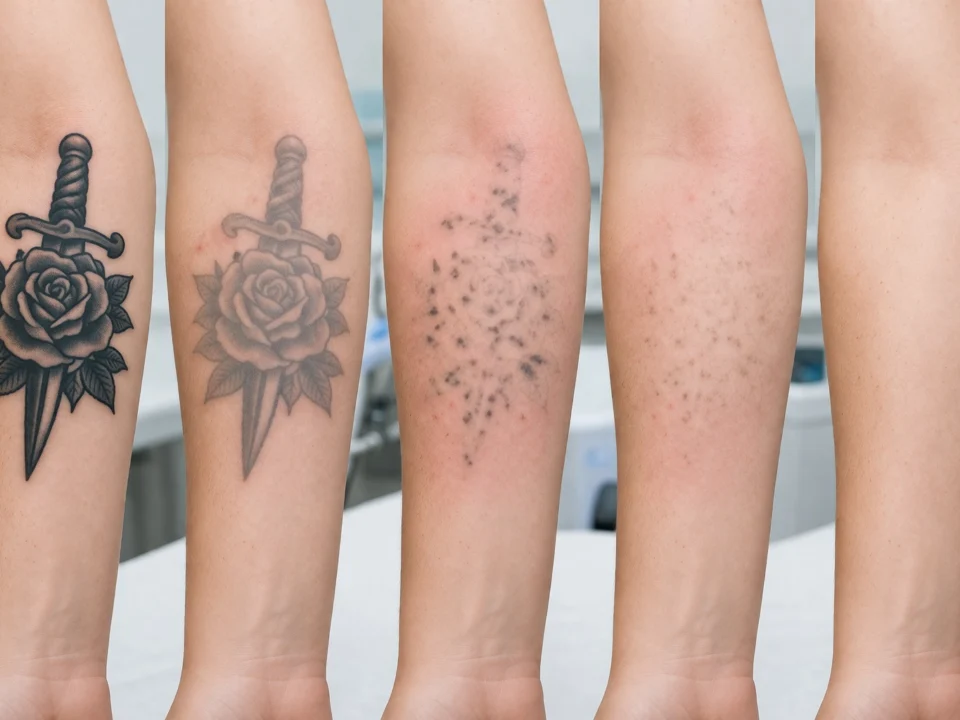
7 Factors That Affect How Long Tattoo Removal Takes
1. Tattoo Size
Larger tattoos contain more ink volume and require more laser passes per session and more sessions overall. A full sleeve removal can take 3 to 4 years; a small wrist tattoo may clear in under a year.
2. Ink Color
Ink color is one of the most significant variables in removal speed. Black and dark grey absorb all laser wavelengths efficiently and clear fastest. Other colors respond differently:
- Black and dark grey — fastest to clear, responds to all laser types
- Dark blue and dark green — responds well, moderate removal speed
- Red and orange — moderately responsive, may require additional sessions
- Light blue, purple, teal — slower to respond, adds sessions and time
- Yellow and light green — slowest and most difficult to remove
- White ink — can darken paradoxically; requires specialist assessment
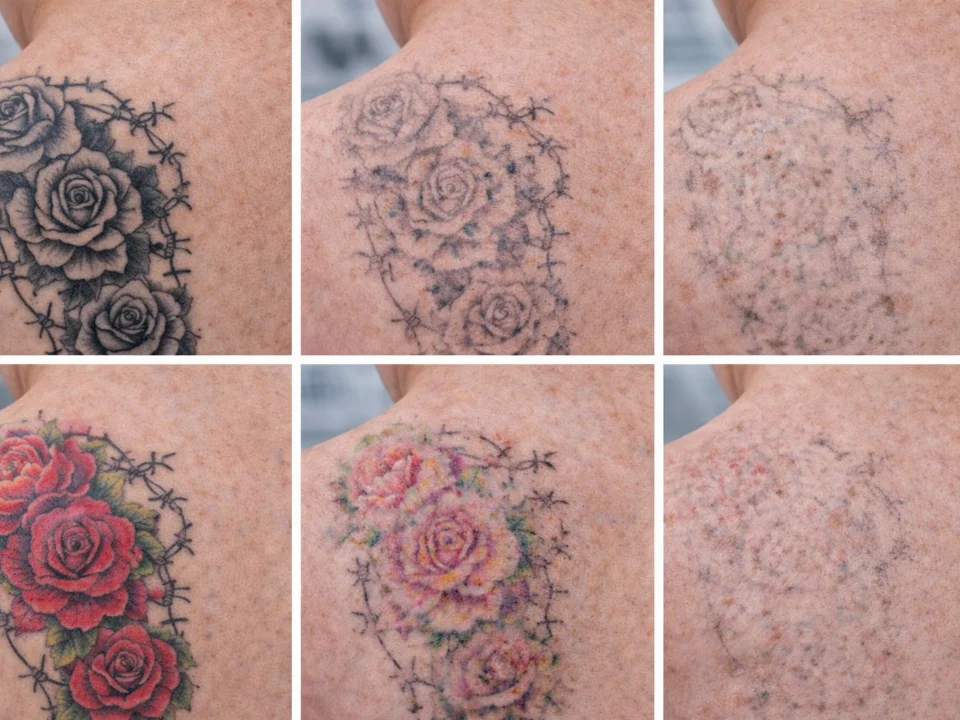
3. Ink Depth and Density
Professionally applied tattoos are packed with more ink at a consistent depth than amateur work. This makes them more vibrant and more resistant to removal. Cover-up tattoos are the most challenging — they contain layered ink from two separate tattoos, effectively doubling the volume that needs to be cleared.
4. Tattoo Age
Older tattoos fade naturally over time as the body gradually breaks down ink particles. A 15-year-old tattoo that has already visibly softened will clear faster than a fresh tattoo applied within the past year. If your tattoo is older and faded, factor this into your session estimate — it genuinely reduces the number of sessions required.
5. Skin Type and Tone
Darker skin tones require lower laser energy settings to avoid hyperpigmentation or hypopigmentation. This does not prevent removal, but it does extend the timeline — lower settings mean more sessions are needed to achieve the same clearance level. An experienced technician will adjust the approach accordingly.
6. Tattoo Location
Body location affects removal speed because the lymphatic system — which clears fragmented ink — is more active in areas with better circulation. Tattoos closer to the torso (chest, upper back, upper arm) clear faster than those on the extremities. Ankle and foot tattoos are consistently the slowest to clear due to reduced circulation in those areas.
7. Laser Technology Used
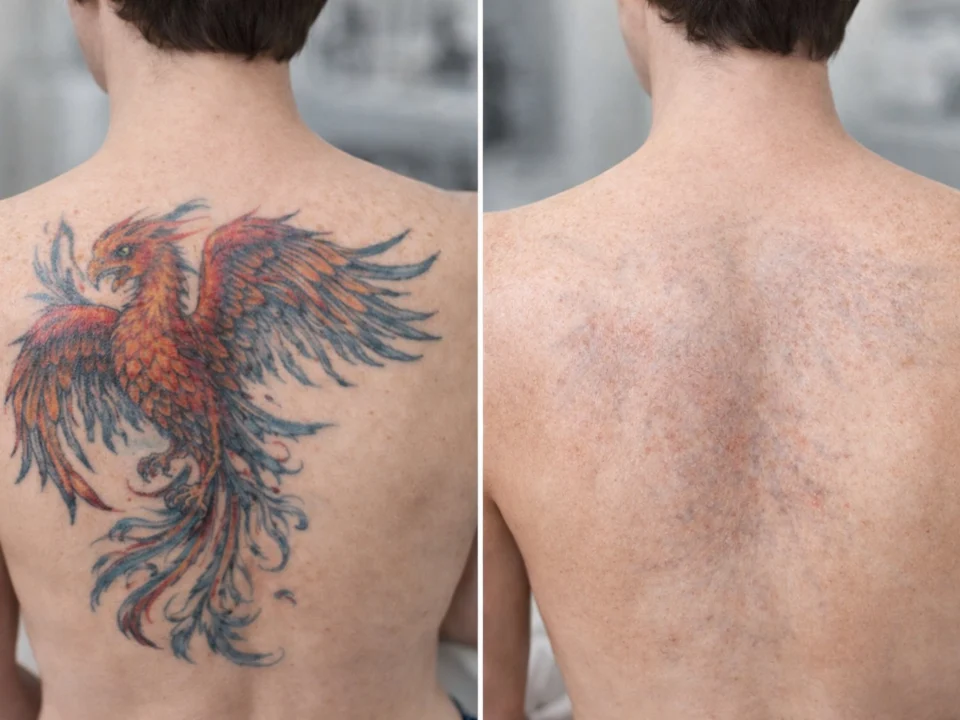
Picosecond lasers (PicoSure, PicoWay) deliver energy in trillionths of a second, shattering ink more efficiently than older Q-switched nanosecond devices. Clinics using current picosecond technology typically achieve results in fewer sessions. When choosing a clinic, ask specifically what laser type they use and whether it is appropriate for your ink colors and skin tone.
How Long Does It Take to Remove a Small Tattoo?
Small tattoos — generally under 5cm — are the fastest to remove. Most require 4 to 6 sessions spaced 6 to 8 weeks apart, producing a total removal timeline of approximately 6 to 12 months. Black ink on lighter skin at this scale is the most favorable combination for fast removal.
Even small tattoos cannot be safely removed in fewer than 4 sessions, regardless of how faded they appear — the ink deposited in the dermis requires multiple laser treatments and corresponding immune clearance cycles to eliminate fully.
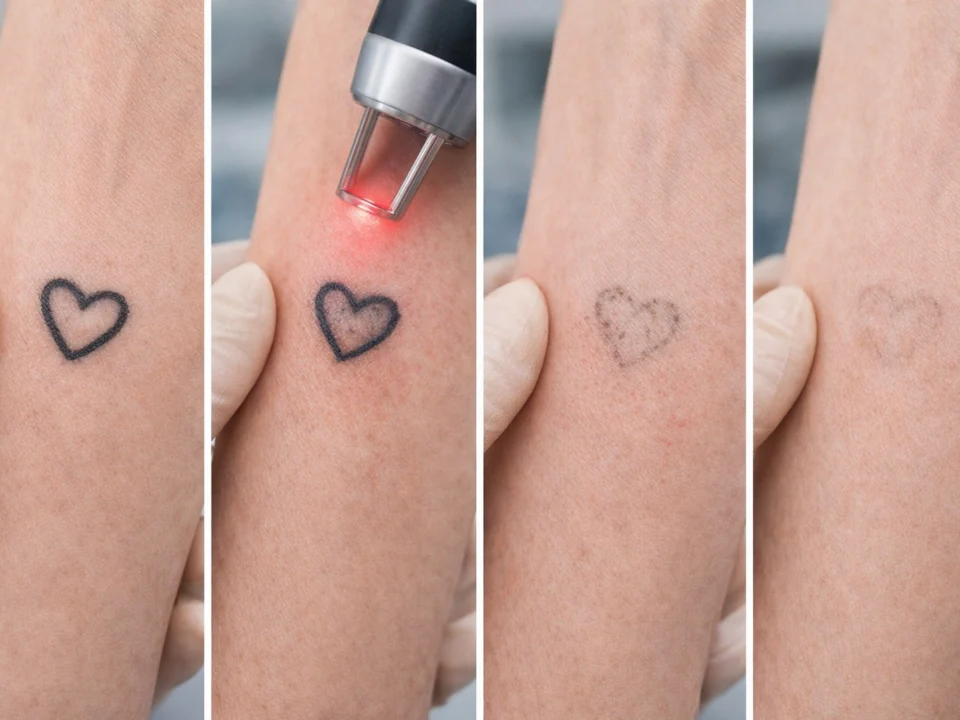
How Long Does Skin Take to Heal Between Sessions?
Healing between sessions follows a consistent pattern for most people. Understanding what is normal at each stage helps you recognize when healing is progressing well and when to consult your clinician.
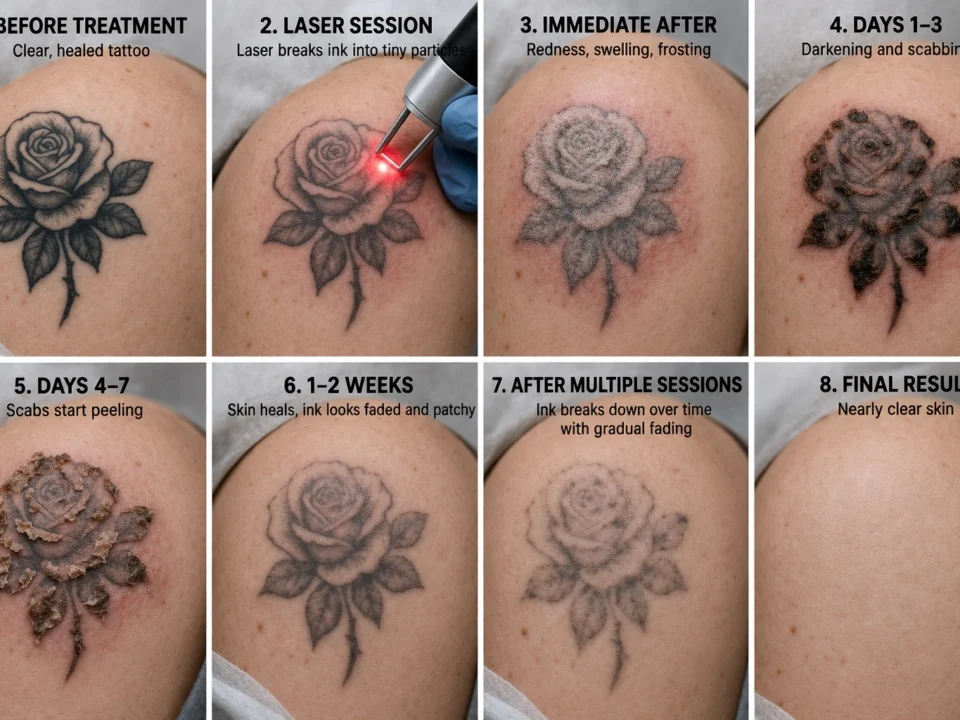
- Days 1–3: redness, swelling, and minor frosting effect at the treatment site — normal inflammatory response
- Days 3–7: blistering may develop — this is a normal part of the healing process and should not be punctured
- Days 7–14: scabbing and peeling as the outer skin regenerates
- Weeks 2–8: progressive fading as the lymphatic system clears fragmented ink particles
- Week 8+: the skin is ready for the next session
Rushing sessions shortens the immune clearance period, which reduces the effectiveness of subsequent treatments and increases the risk of permanent skin changes. The 6 to 8 week interval is clinically established — not a scheduling convenience.
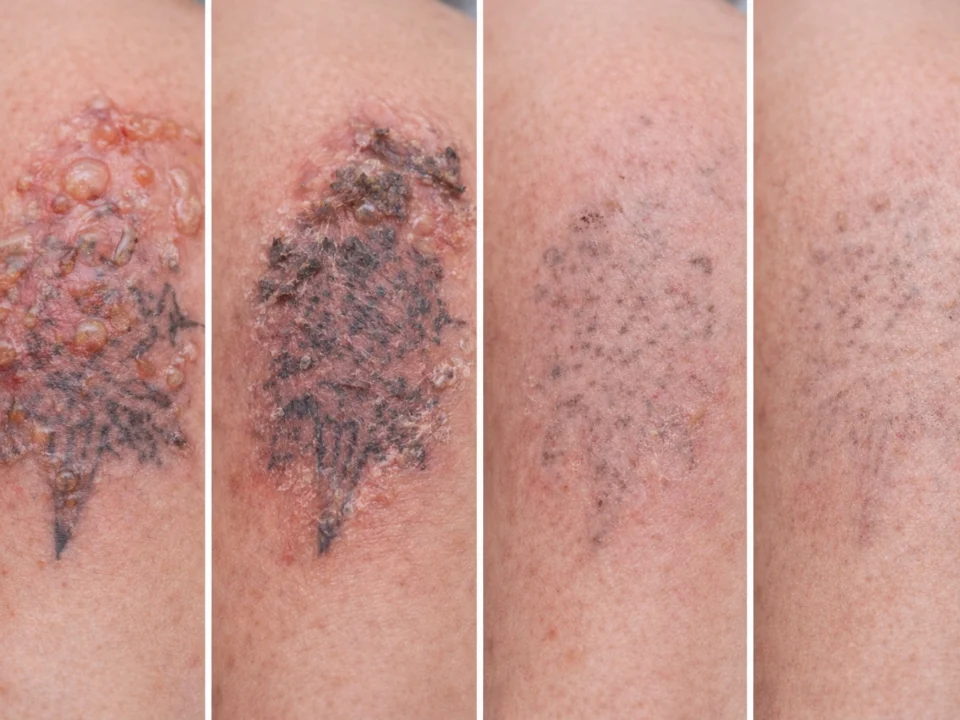
Does Tattoo Removal Hurt?
Most people describe laser tattoo removal as comparable to repeated rubber band snaps against the skin. It is uncomfortable but brief per pulse. Modern clinics use cooling devices and topical numbing creams to significantly reduce discomfort — if pain management is a concern, ask your clinic what options they offer before your first appointment.
For information on numbing options specifically, see our guide to whether numbing cream works for tattoo procedures.
Does Tattoo Removal Leave Scars?
When performed correctly by a qualified professional, laser tattoo removal rarely causes permanent scarring. The primary scarring risks are sessions spaced too closely together (insufficient healing time), picking or scratching the treated area during healing, and treatment by unlicensed or undertrained technicians using incorrect laser settings.
Choosing a clinic staffed by or supervised by a licensed dermatologist or medical professional is the most reliable way to minimize scarring risk. The difference in outcomes between qualified and unqualified providers is significant.
Can Tattoo Removal Be Sped Up?
There is no safe shortcut to faster tattoo removal — the timeline is determined by biological processes that cannot be significantly accelerated. However, several factors within your control influence how efficiently your body clears fragmented ink between sessions:
- Stay well hydrated — lymphatic function depends on adequate hydration
- Avoid smoking — smoking impairs immune function and measurably slows ink clearance between sessions
- Follow aftercare instructions precisely — proper wound care reduces healing complications that delay the next session
- Maintain the recommended session interval — longer intervals (8–10 weeks) sometimes produce better clearance than the minimum 6 weeks, particularly for slower-responding ink colors
- Exercise regularly — cardiovascular activity supports lymphatic circulation
Tattoo Removal vs. Cover-Up: Which Is Right for You?
Complete removal is not always the most practical or cost-effective path. Many people choose to lighten a tattoo through 3 to 5 laser sessions — enough to fade it sufficiently for a cover-up design — rather than pursuing complete clearance. This approach is faster, requires fewer sessions, costs less in total, and produces a new tattoo rather than bare skin.
If you are weighing removal against redesign, our guides to cover-up tattoo ideas and tattoo filler ideas for sleeve compositions cover specific design approaches that work well over faded or lightened tattoos.
About the Author
Jessica Reed is a tattoo research writer and content specialist at TattooFillerIdeas.com, covering tattoo styles, skin care, and laser procedures. With a focus on accurate, research-backed content, Jessica helps readers make informed decisions about their tattoos — from design and placement to removal and aftercare. View all articles by Jessica Reed →
👉 Tattoo Removal Before and After
👉 Laser Tattoo Removal How Much
👉 How Many Treatments Does Tattoo Removal Take
👉 Does Numbing Cream Work for Tattoo
How long does it take to remove a tattoo completely?
Complete tattoo removal takes between 6 months and 2 years for most people. Small, single-color black tattoos can clear in 6 to 12 months with 4 to 6 sessions. Large, multicolored, or professionally applied tattoos may require 12 to 24 months or more with 10 to 15 sessions. Sessions are spaced 6 to 8 weeks apart, meaning the total timeline is determined primarily by session count multiplied by the interval between treatments.
How many laser sessions are needed to remove a tattoo?
Most tattoos require 6 to 12 laser sessions for complete or near-complete removal. Small single-color tattoos may clear in 4 to 6 sessions. Large, multicolored, or cover-up tattoos can require 12 to 15 sessions or more. The only reliable way to estimate your specific session count is an in-person consultation with a qualified removal technician who can assess the tattoo’s size, ink colors, depth, and age directly.
How long does it take to remove a small tattoo?
Small tattoos under 5cm typically require 4 to 6 laser sessions and a total removal timeline of 6 to 12 months. Black ink on lighter skin at this scale clears fastest. Even small tattoos cannot be safely removed in fewer than 4 sessions — the ink deposited in the dermis requires multiple laser treatments and corresponding immune clearance cycles to eliminate fully.
What is the fastest way to remove a tattoo?
Laser removal — specifically with picosecond laser technology (PicoSure, PicoWay) — is the fastest clinically proven method for tattoo removal. Picosecond lasers shatter ink more efficiently than older Q-switched devices and typically achieve comparable results in fewer sessions. There is no safe method that removes a tattoo in a single session. Supporting your body’s immune function through hydration, avoiding smoking, and following aftercare instructions helps maximize clearance speed between sessions.
Does tattoo removal leave scars?
When performed correctly by a qualified professional, laser tattoo removal rarely causes permanent scarring. The primary risks are sessions spaced too closely together, picking or scratching during healing, and treatment by undertrained technicians using incorrect settings. Choosing a clinic supervised by a licensed dermatologist or medical professional significantly reduces scarring risk. Pre-existing scarring within the tattoo itself may become more visible as the ink clears.
How long between tattoo removal sessions?
The standard interval between laser tattoo removal sessions is 6 to 8 weeks. This interval allows the immune system to clear fragmented ink from the previous session and gives the skin adequate healing time. Some clinicians recommend extending the interval to 10 to 12 weeks for clients with slower immune response or for lower-energy treatments required by darker skin tones. Shortening the interval does not speed up removal — it reduces effectiveness and increases complication risk.





I started looking into tattoo removal because I have an old tattoo I no longer like, and this article answered one of my biggest questions: how long does it take to remove a tattoo. I didn’t realize that laser tattoo removal usually takes multiple sessions spread out over months, depending on ink color and tattoo size. Reading this helped set realistic expectations and made the whole tattoo removal process feel less intimidating. Really useful for anyone going through the same research phase.
I’ve been researching laser tattoo removal for a while and kept wondering how long does it take to remove a tattoo. This article explained the timeline in a very realistic way and helped me understand why patience is so important during the removal process. Knowing that results depend on factors like tattoo age and ink type made everything much clearer. Helpful read for anyone thinking about starting tattoo removal.
I was unsure about starting laser tattoo removal and kept asking myself how long does it take to remove a tattoo. This article made the tattoo removal process and timeline much easier to understand. The explanation of laser tattoo removal sessions and waiting time between treatments was really helpful for planning ahead.