How Many Sessions Does It Take to Remove a Tattoo? (2026 Guide)
How many treatments tattoo removal take? Most tattoos require 6 to 12 laser sessions for complete or near-complete removal, spaced 6 to 8 weeks apart. Smaller, older, single-color tattoos can clear in as few as 4 sessions. Large, multicolored, or professionally applied tattoos may need 15 or more. This guide breaks down exactly what determines your session count — and what a realistic removal timeline looks like.
Table Of Content
- How Many Sessions Does Tattoo Removal Take? (Quick Answer)
- Why Tattoo Removal Takes Multiple Sessions
- 7 Factors That Determine How Many Treatments Tattoo Removal You Need
- 1. Tattoo Size
- 2. Ink Color
- 3. Ink Density and Depth
- 4. Tattoo Age
- 5. Skin Type and Tone
- 6. Tattoo Location
- 7. Laser Technology Used
- How Long Between Tattoo Removal Sessions?
- Tattoo Removal Progress: What to Expect Session by Session
- Does Tattoo Removal Hurt?
- How Much Does Tattoo Removal Cost Per Session?
- What Does Tattoo Removal Look Like Before and After?
- Final Thoughts
- About the Author
- How many treatments does tattoo removal take?
- Can a tattoo be fully removed in one session?
- How many sessions for a small tattoo removal?
- Why does tattoo removal take so many sessions?
- How long between tattoo removal sessions?
- Does tattoo removal hurt?
How Many Sessions Does Tattoo Removal Take? (Quick Answer)
The table below gives a realistic starting estimate based on tattoo size. These are averages — your actual number may be higher or lower depending on the factors covered further in this guide.
| Tattoo Type | Estimated Sessions | Approx. Timeline |
|---|---|---|
| Small (under 5cm) | 4–6 sessions | 6–12 months |
| Medium (5–15cm) | 6–10 sessions | 10–18 months |
| Large (15cm+) | 10–15 sessions | 18–30 months |
| Full sleeve / cover-up | 15+ sessions | 2–4 years |
Sessions are spaced 6 to 8 weeks apart to allow the immune system time to clear fragmented ink particles between treatments. Rushing this interval does not speed up removal — it limits results and increases the risk of skin damage.
Why Tattoo Removal Takes Multiple Sessions
Tattoo ink is deposited in the dermis — the second, deeper layer of skin. The body recognizes ink particles as foreign material but cannot eliminate them on its own because the particles are too large for the immune system to process.
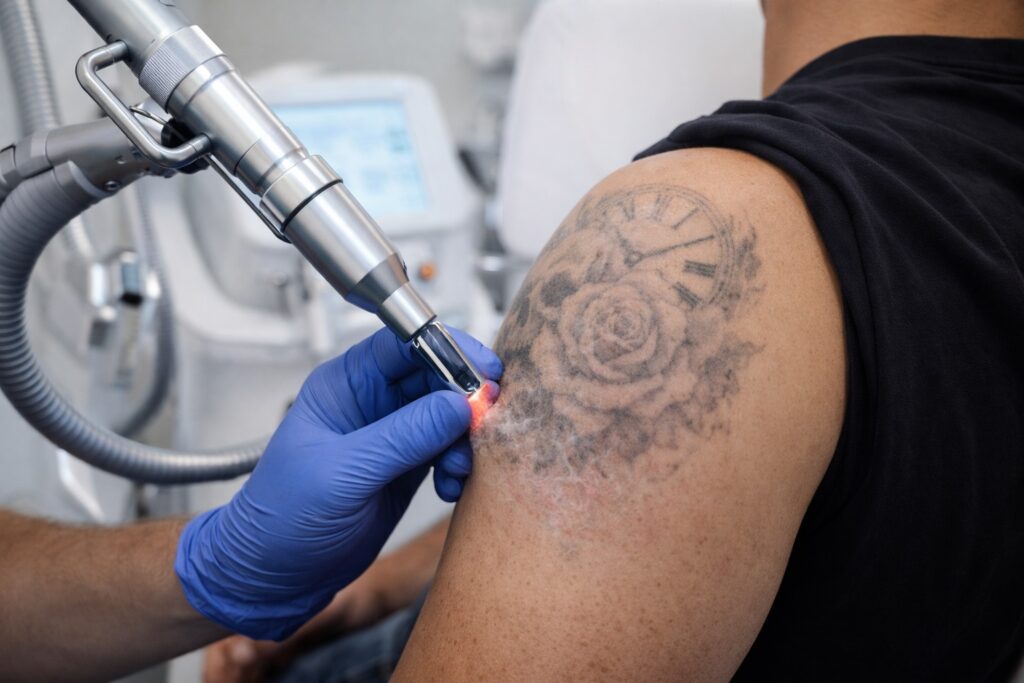
Laser tattoo removal works by firing concentrated pulses of light energy into the tattooed skin. The energy is absorbed by the ink pigment, shattering it into microscopic fragments small enough for the lymphatic system to carry away. Each session breaks down a portion of the ink. The body then spends the following 6–8 weeks clearing what the laser fragmented.
This is why complete removal is a gradual process by design — not a limitation of the technology, but a function of how the body heals and eliminates waste. No single session can remove all the ink at once without causing severe thermal damage to the skin.
7 Factors That Determine How Many Treatments Tattoo Removal You Need
1. Tattoo Size
The most straightforward variable. Larger tattoos contain more ink volume, requiring more laser passes per session and more sessions overall. A 3cm wrist tattoo and a full back piece are not comparable in any meaningful way when estimating removal time.
2. Ink Color
Black and dark grey ink responds fastest to laser treatment because it absorbs the broadest range of laser wavelengths. Other colors require specific wavelengths to break down effectively:
- Black / dark grey — fastest to clear, responds to all laser types
- Dark blue / dark green — responds well, may need additional sessions
- Red / orange — moderately responsive; some reds are stubborn
- Light blue / purple — slower to respond, may require more sessions
- Yellow / light green / teal — the most difficult colors to remove; often require specialist equipment
- White ink — can darken paradoxically when treated; requires specialist assessment before proceeding
Multicolored tattoos take the longest because each pigment requires a different laser wavelength, and no single device targets all colors equally well.
3. Ink Density and Depth
Professionally applied tattoos are typically packed with more ink at a more consistent depth than amateur work. This makes them more vibrant — and more resistant to removal. Two tattoos of identical size may require very different session counts based purely on how much ink was deposited and how deeply.
Cover-up tattoos present a particular challenge. They contain layered ink from two separate tattoos, effectively doubling the ink volume that needs to be cleared. Expect to add 3 to 5 additional sessions beyond a standard estimate for cover-up removal.
4. Tattoo Age
Older tattoos fade over time as the body gradually breaks down ink particles, even without treatment. A 20-year-old tattoo that has already softened visibly will typically clear faster than a fresh tattoo applied within the past year. If your tattoo has faded naturally, factor that into your session estimate — it genuinely does make a difference.
5. Skin Type and Tone
Laser settings must be calibrated carefully for darker skin tones to avoid hyperpigmentation or hypopigmentation — uneven lightening or darkening of the skin around the tattoo. This requires lower energy settings, which can extend the number of sessions needed for full clearance. It does not make removal impossible, but it does change the clinical approach required.
6. Tattoo Location
The body’s lymphatic system clears shattered ink particles, and areas with higher blood flow and lymphatic activity respond faster. Tattoos closer to the torso (chest, upper back, upper arm) typically fade more quickly than those on the extremities. Ankle and foot tattoos are consistently among the slowest to clear due to reduced circulation in those areas.
7. Laser Technology Used
Modern picosecond lasers (PicoSure, PicoWay) deliver energy in trillionths of a second, shattering ink more efficiently than older Q-switched nanosecond devices. Clinics using current picosecond technology typically achieve results in fewer sessions than those using older equipment. When comparing clinics, ask specifically what laser type they use and whether it is appropriate for your ink colors and skin tone.
Laser tattoo removal devices are regulated and cleared for marketing by the U.S. Food and Drug Administration (FDA). According to the FDA, laser removal requires using the correct type of laser, understanding tissue reaction, and proper post-procedure care — and must be performed by or under the supervision of a qualified health care professional.
How Long Between Tattoo Removal Sessions?
The standard interval between sessions is 6 to 8 weeks. This is not arbitrary — it reflects the time the immune system needs to clear the fragmented ink from the previous session and for the skin to heal fully.
Shortening the interval does not accelerate removal. It reduces the amount of ink the body has cleared before the next treatment, which can actually lower the effectiveness of subsequent sessions. Some clinics may recommend extending intervals to 10–12 weeks for clients with slower immune response or those being treated at lower energy settings due to skin type.
Based on a standard 6–8 week interval, a complete removal timeline for a typical medium tattoo spans approximately 12 to 20 months from first session to final clearance.
Tattoo Removal Progress: What to Expect Session by Session
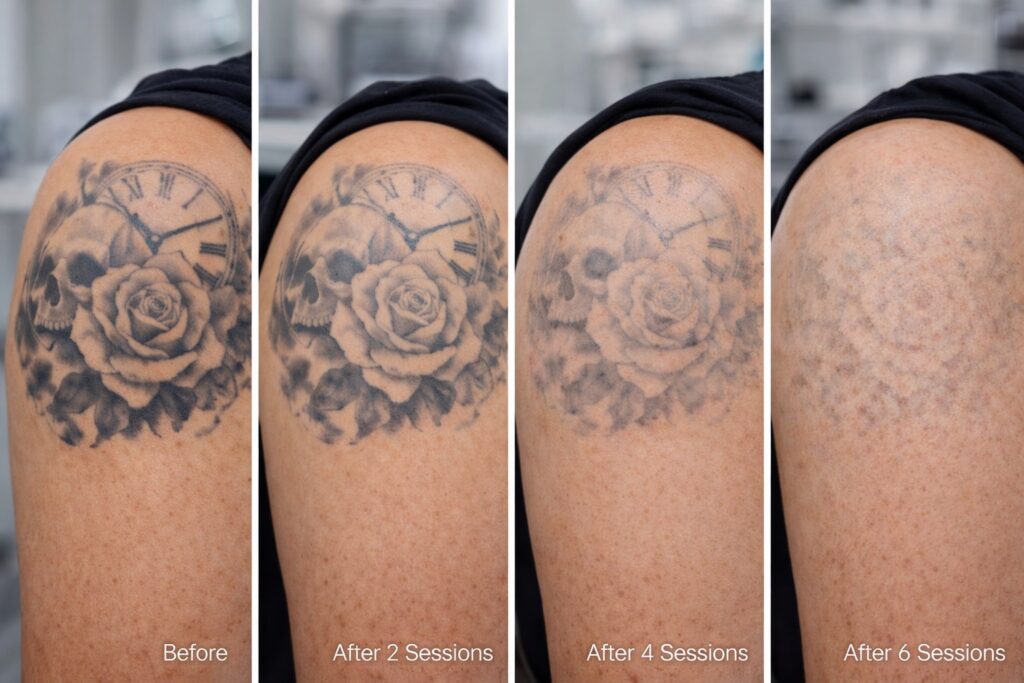
Progress is rarely linear. Most people experience bursts of visible fading followed by sessions where the change appears smaller. This is entirely normal and does not indicate that the treatment has stopped working.
- Sessions 1–2: Skin reacts visibly (redness, swelling, frosting effect). Fading may be minimal at the surface, but ink fragmentation is occurring beneath the skin.
- Sessions 3–4: Noticeable lightening begins. Outlines soften and filled areas start to show patchy fading.
- Sessions 5–7: Significant fading across most of the tattoo. Light-colored inks and poorly saturated areas may already be mostly gone.
- Sessions 8–10: Stubborn pigments (deep blacks, difficult colors) continue to break down. Overall composition fades substantially.
- Sessions 10+: Final clearance phase. Remaining ghost lines and resistant pigments addressed with targeted treatment. Results at this stage depend heavily on the original tattoo and the individual’s immune response.
Does Tattoo Removal Hurt?
Most people describe laser tattoo removal as comparable to the snap of a rubber band against the skin — repeated rapidly across the treatment area. It is uncomfortable, particularly in sensitive areas, but the sensation is brief per pulse.
Modern clinics use cooling devices and topical numbing creams to significantly reduce discomfort. If pain management during the session is a concern for you, ask your clinic what options they offer before your first appointment. You can also read more about whether numbing cream works for tattoo procedures.
How Much Does Tattoo Removal Cost Per Session?
Session costs typically range from $75 to $500 depending on tattoo size, clinic location, and laser technology used. Larger tattoos and specialist equipment command higher per-session rates.
When calculating total removal cost, multiply the per-session rate by your estimated session count — and build in a buffer of 2–3 additional sessions for realistic budgeting. For a full cost breakdown by tattoo size and removal method, see our guide to tattoo removal cost per session.
What Does Tattoo Removal Look Like Before and After?
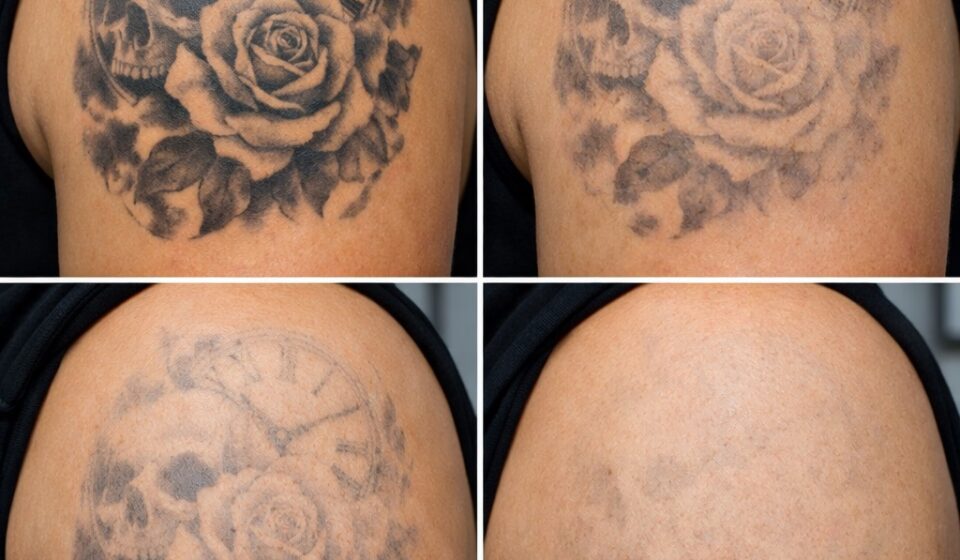
Seeing documented results is one of the most useful ways to calibrate realistic expectations before starting treatment. Fading varies significantly based on tattoo type, ink color, and skin tone. Reviewing before and after tattoo removal photos across different tattoo types gives a more accurate picture than estimated session counts alone.
For more detailed information on the full removal process, read our complete guide: how long does it take to remove a tattoo.
Final Thoughts
Tattoo removal is a commitment — in time, cost, and patience. The most important thing you can do before starting is consult with a qualified laser technician who can assess your specific tattoo in person and give you a realistic session estimate based on your ink, skin type, and the equipment they use.
Avoid clinics that promise removal in fewer sessions than the evidence supports, or that cannot clearly explain what laser technology they use and why it is appropriate for your tattoo. A thorough pre-treatment consultation is the most reliable indicator of a clinic worth trusting.
For a full overview of removal costs, see: how much laser tattoo removal costs.
About the Author
Jessica Reed is a tattoo research writer and content specialist at TattooFillerIdeas.com, covering tattoo styles, skin care, and laser procedures. With a focus on accurate, research-backed content, Jessica helps readers make informed decisions about their tattoos — from design and placement to removal and aftercare. View all articles by Jessica Reed →
👉 Tattoo Removal Before and After
👉 Laser Tattoo Removal How Much
👉 How Long Does It Take to Remove a Tattoo
👉 Does Numbing Cream Work for Tattoo
How many treatments does tattoo removal take?
Most tattoos require 6 to 12 laser removal sessions for complete or near-complete clearance. Small, single-color tattoos may clear in 4 to 6 sessions. Large, multicolored, or professionally applied tattoos can require 15 or more. Sessions are spaced 6 to 8 weeks apart, meaning a complete removal timeline typically spans 12 to 24 months.
Can a tattoo be fully removed in one session?
No. Complete tattoo removal is never achievable in a single session. Each laser treatment breaks down a portion of the ink, which the immune system then clears over the following 6 to 8 weeks. Attempting to remove all ink in one session would cause severe burns and permanent scarring.
How many sessions for a small tattoo removal?
Small tattoos — generally under 5cm — typically require 4 to 6 sessions for full removal. Results depend on ink color, depth, and age of the tattoo. Black ink on lighter skin responds fastest and may clear at the lower end of that range.
Why does tattoo removal take so many sessions?
Laser removal works by shattering ink particles into fragments small enough for the lymphatic system to eliminate. The body can only process a limited amount of fragmented ink between sessions, which is why multiple treatments spaced weeks apart are necessary. The process follows the body’s natural healing timeline, not the laser’s capability.
How long between tattoo removal sessions?
The standard interval is 6 to 8 weeks. This allows the immune system to clear fragmented ink from the previous session and gives the skin adequate time to heal. Reducing the interval does not speed up removal — it reduces the body’s clearance efficiency and can lower the effectiveness of subsequent sessions.
Does tattoo removal hurt?
Laser tattoo removal is uncomfortable but manageable. Most patients describe it as similar to repeated rubber band snaps against the skin. Modern clinics use cooling devices and topical numbing creams to reduce discomfort significantly. Pain levels vary by location — ribs, feet, and hands are typically more sensitive than upper arm or back areas.