Hawaiian Tattoos and Meanings: Culture, Symbols, and Spiritual Stories
Hawaiian tattoos and meanings represent one of the most culturally rich and symbolically dense tattoo traditions in the world. Rooted in centuries of Polynesian heritage, Hawaiian tattoo designs communicate identity, ancestry, spiritual protection, and personal milestones — each pattern, line, and symbol carrying intentional meaning that extends far beyond aesthetics. This guide covers the most significant Hawaiian tattoo symbols, their cultural origins, and what to consider before choosing a design.
Table Of Content
- The Cultural Significance of Hawaiian Tattoos
- Most Significant Hawaiian Tattoos and Meanings Symbols
- Hawaiian Turtle (Honu) Tattoo Meaning
- Hawaiian Wave Tattoo Meaning
- Hawaiian Flower Tattoo Meanings
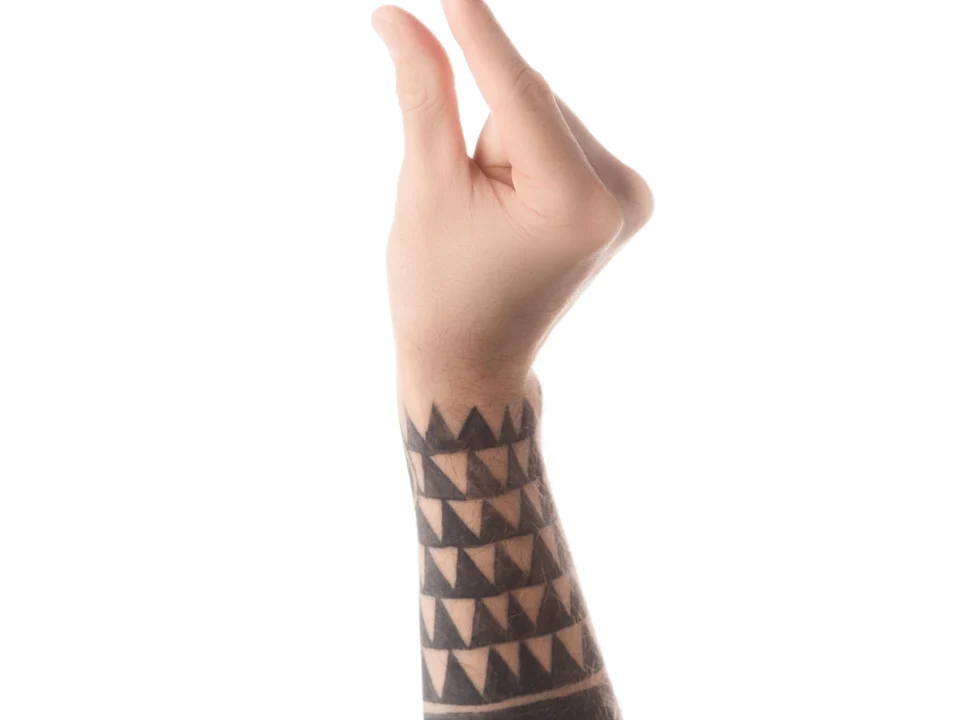
- Shark Tooth (Niho Mano) Tattoo Meaning
- Hawaiian Gecko (Moʻo) Tattoo Meaning
- Hawaiian Tribal Tattoos and Their Meanings
- Traditional vs. Modern Hawaiian Tattoo Designs
- Traditional Hawaiian Tattoos
- Modern Hawaiian Tattoos
- Hawaiian Tattoo Placement and Composition
- Hawaiian Tattoos and Modern Tattoo Compositions
- Cultural Considerations Before Getting a Hawaiian Tattoo
- What do Hawaiian tattoos mean?
- What is the most common Hawaiian tattoo symbol?
- What does the Hawaiian turtle tattoo symbolize?
- Are Hawaiian tattoos cultural or religious?
- Can non-Hawaiians get Hawaiian tattoos?
- What is the difference between Hawaiian and Polynesian tattoos?
- Do Hawaiian tattoos have spiritual meaning?

The Cultural Significance of Hawaiian Tattoos
Hawaiian tattooing — known as kākau — is one of the oldest continuous tattoo traditions in the Pacific. In ancient Hawaii, tattoos were considered sacred and were applied using traditional hand-tapping techniques: sharp cutting tools repeatedly tapped by a small mallet into the skin. The process was as much spiritual as physical, often performed by specialist practitioners with deep knowledge of the patterns and their cultural significance.
Every line, shape, and repetitive pattern in traditional Hawaiian tattoo design carried deliberate meaning. Tattoos were not decorative choices — they were biographical records, spiritual armor, and social markers applied with cultural intention. As National Geographic documents, the Polynesian tattoo tradition spans over 3,000 years across the Pacific, with Hawaiian tattoos forming a distinct branch rooted in island-specific symbolism, ancestral identity, and spiritual belief.
Key cultural roles of Hawaiian tattoos:
- Genealogy and ancestry — tattoos recorded family lineage and demonstrated connection to specific ancestral lines
- Social rank and achievement — pattern placement and complexity signaled status within the community
- Spiritual protection — certain designs were believed to create a protective barrier around the wearer
- Rites of passage — significant life transitions were marked with new tattoo work
- Connection to nature and the divine — animals, ocean, and natural elements carried specific spiritual associations

Most Significant Hawaiian Tattoos and Meanings Symbols
Hawaiian Turtle (Honu) Tattoo Meaning
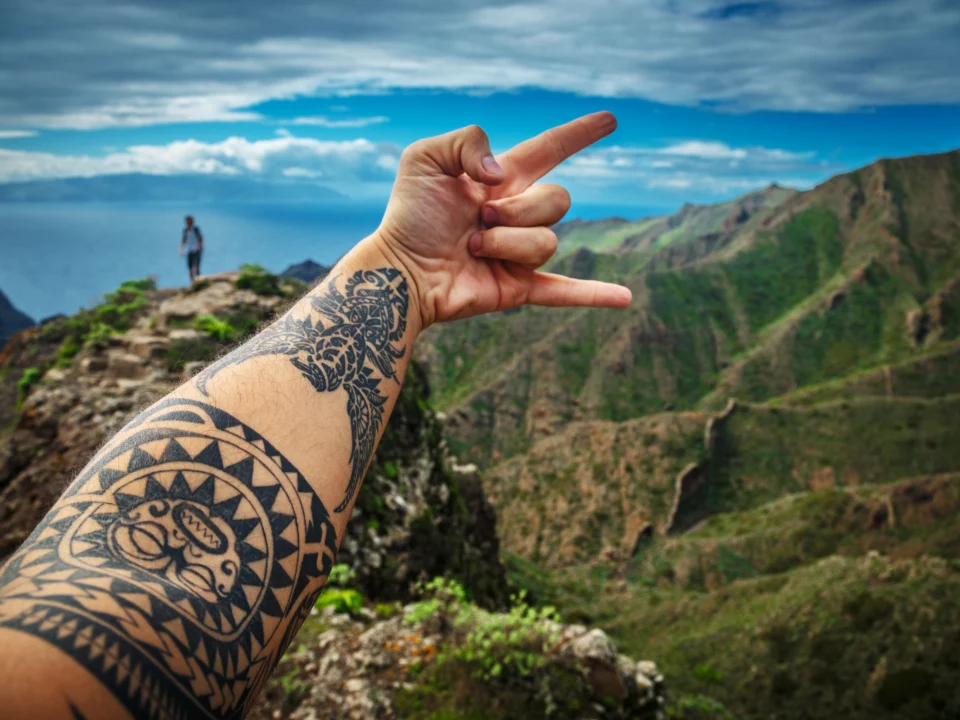
The Honu — the Hawaiian green sea turtle — is one of the most recognized and deeply meaningful symbols in Hawaiian tattoo tradition. In Hawaiian culture, sea turtles are considered aumakua: ancestral spirit guardians that take animal form to protect and guide their descendants.
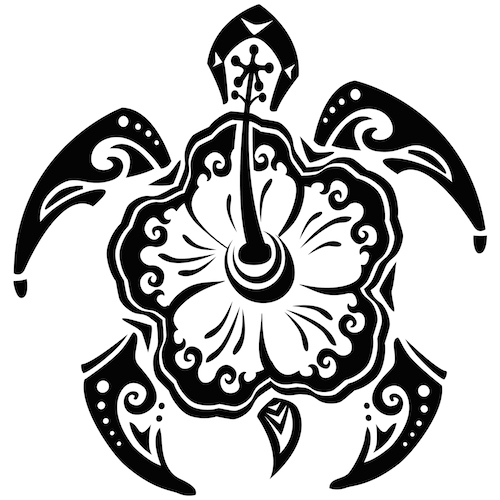
The Honu tattoo represents longevity, peace, protection, safe passage, and family unity. Because sea turtles navigate vast oceanic distances yet always return to the same shores, they also symbolize the constancy of home and the endurance of family bonds across distance and time. For many wearers, a Honu tattoo marks a commitment to family protection or serves as a memorial to an ancestor believed to watch over them.
Hawaiian Wave Tattoo Meaning
The ocean is central to Hawaiian life, identity, and spirituality — it is the source of sustenance, the medium of navigation, and the domain of powerful deities. Wave tattoos carry this layered significance directly.
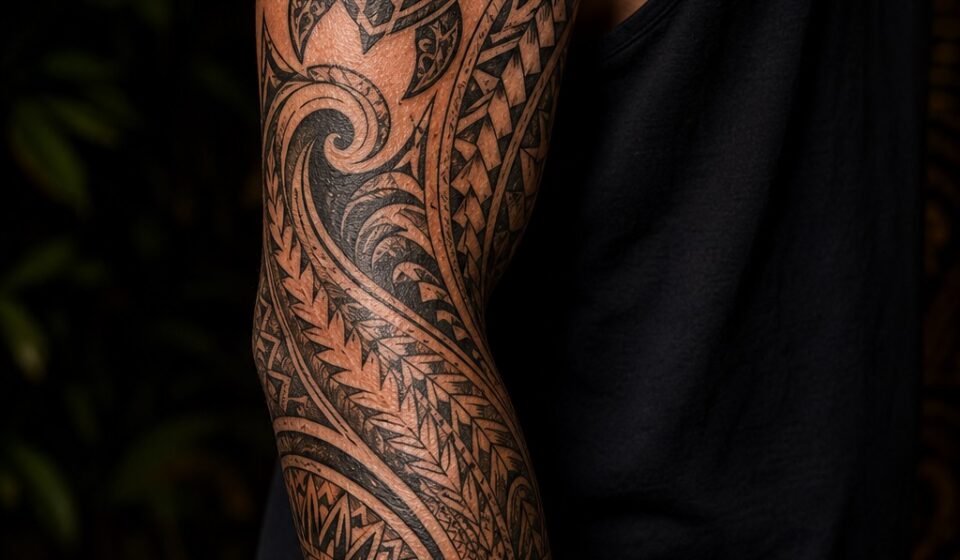
Hawaiian wave tattoos symbolize strength and resilience, life’s constant movement and change, deep respect for the ocean and its power, adaptability in the face of adversity, and emotional balance — the capacity to rise and fall without losing direction. Wave designs also carry practical compositional advantages: their flowing, directional forms adapt naturally to the arm, chest, and leg, making them among the most effective elements in larger Hawaiian sleeve compositions.
Hawaiian Flower Tattoo Meanings
Flowers in Hawaiian tattoo tradition carry softer but equally layered symbolism. The three most significant Hawaiian flower tattoo subjects each carry distinct meaning.
The Hibiscus — Hawaii’s state flower — represents beauty, joy, femininity, and delicate strength. It is one of the most widely recognized Hawaiian cultural symbols and appears in both traditional and modern tattoo compositions. The Plumeria (Pua Melia) symbolizes positivity, new beginnings, celebration, and spiritual awakening — it is closely associated with the Hawaiian concept of aloha and is worn in lei during significant life events. The Orchid carries meanings of love, inner strength, rare beauty, and luxury — it is less traditionally Hawaiian but has become incorporated into modern Hawaiian-inspired tattoo compositions.

Shark Tooth (Niho Mano) Tattoo Meaning
The Niho Mano — shark tooth pattern — is one of the oldest and most distinctly Hawaiian tattoo motifs. In Hawaiian tradition, the shark (Mano) is one of the most powerful aumakua forms, representing warrior strength and protective ferocity.
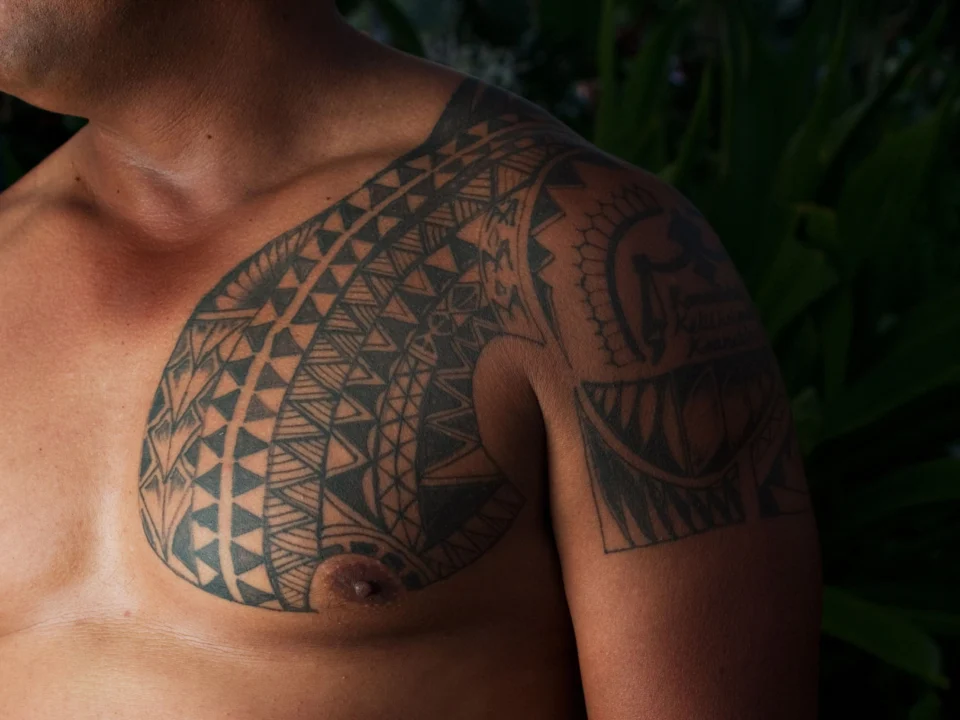
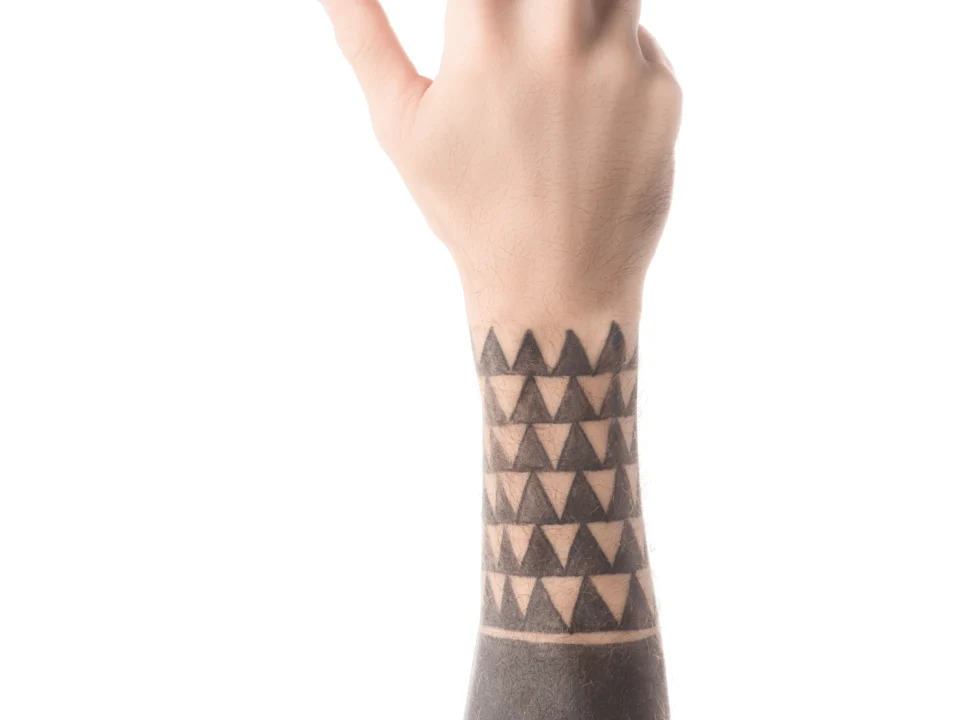
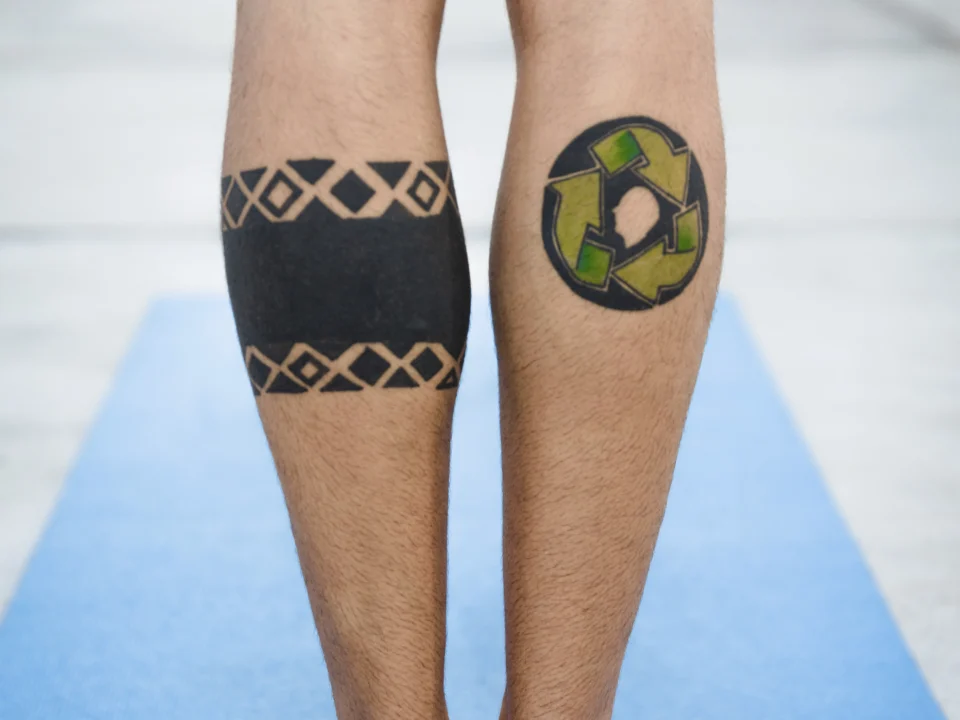
Shark tooth tattoos symbolize strength, protection, courage, leadership, and fearlessness. Historically, Hawaiian warriors applied these patterns to channel the shark’s predatory power and to signal their status as protectors of their community. Today, Niho Mano patterns appear in tribal bands, full sleeve compositions, and chest pieces — frequently used as both primary design elements and structural filler patterns between larger tattoo subjects.

Hawaiian Gecko (Moʻo) Tattoo Meaning
The Moʻo — gecko or lizard — occupies a unique position in Hawaiian spiritual tradition. In Hawaiian folklore, the Moʻo are supernatural lizard deities associated with water, fertility, and protection. They are believed to guard sacred spaces and watch over those they protect.
Gecko tattoos symbolize good luck, protection from negative energy, spiritual awareness, and guardian energy. They are often chosen as protective symbols by those who have experienced significant personal transitions or who wish to honor the Hawaiian concept of ancestral spiritual protection.
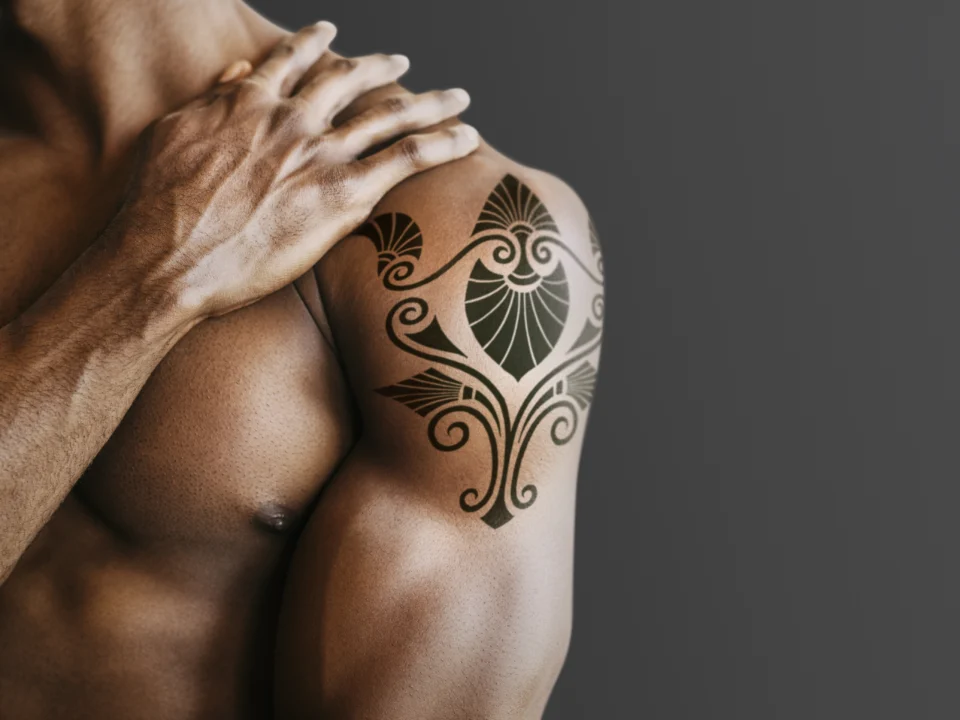
Hawaiian Tribal Tattoos and Their Meanings
Hawaiian tribal tattoos are defined by bold black ink, geometric repetition, and densely patterned compositions. Unlike purely decorative geometric work, each pattern element in authentic tribal tattooing carries specific cultural context — line weight, pattern density, placement on the body, and the combination of elements all contribute to the tattoo’s meaning.
Common meanings embedded in Hawaiian tribal patterns include family heritage and genealogical lineage, social rank within the community, warrior status and martial achievement, significant personal milestones, and ongoing spiritual protection. The patterns are not interchangeable — their specific combinations and placements were historically determined by the wearer’s identity and life history, not by aesthetic preference alone.

Traditional vs. Modern Hawaiian Tattoo Designs
Understanding the distinction between traditional and contemporary Hawaiian tattooing matters for anyone considering a design — particularly for those without Hawaiian ancestry.
Traditional Hawaiian Tattoos
Authentic traditional Hawaiian tattoos were applied exclusively in black ink using hand-tapping techniques. They followed strict cultural protocols, were designed by practitioners with deep genealogical and spiritual knowledge, and carried meanings specific to the individual wearer’s identity and community. Traditional designs were not available for general selection — they were prescribed based on who the wearer was, what they had achieved, and what their ancestry required.
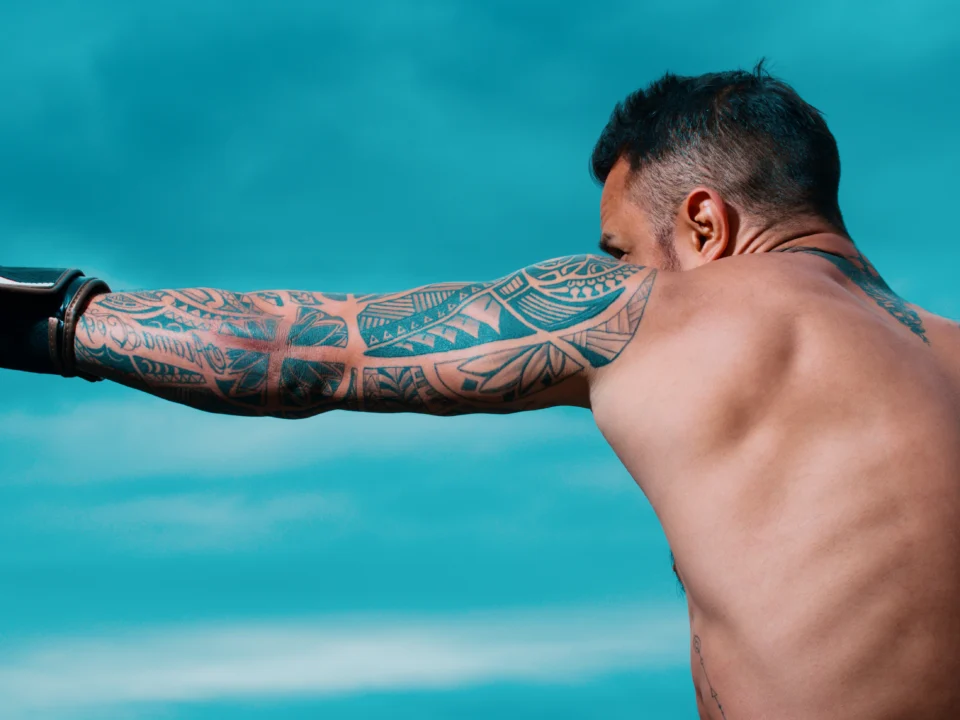
Modern Hawaiian Tattoos
Modern Hawaiian-inspired tattoos adapt traditional symbols and patterns into contemporary compositions. They often incorporate color, fine line techniques, realism elements, and fusion with other tattoo styles. The symbolic roots remain, but the strict cultural protocols of traditional application are adapted for a modern tattoo context.
Both approaches are valid — the distinction matters primarily for cultural awareness. Using traditional Hawaiian symbols in a modern composition is not inherently disrespectful, provided the wearer understands what the symbols mean and approaches them with that knowledge.

Hawaiian Tattoo Placement and Composition
In traditional Hawaiian tattooing, placement was not a personal preference — it was culturally determined. Different body areas carried different symbolic weight, and the placement of a tattoo communicated specific information about the wearer’s identity and status.
In contemporary practice, the most common placements for Hawaiian-inspired tattoos include full sleeve compositions, chest and shoulder panels, leg and thigh pieces, and back compositions. Larger body areas allow Hawaiian symbols to connect in the storytelling flow that the tradition requires — isolated small Hawaiian symbols often lose the compositional context that makes them meaningful.
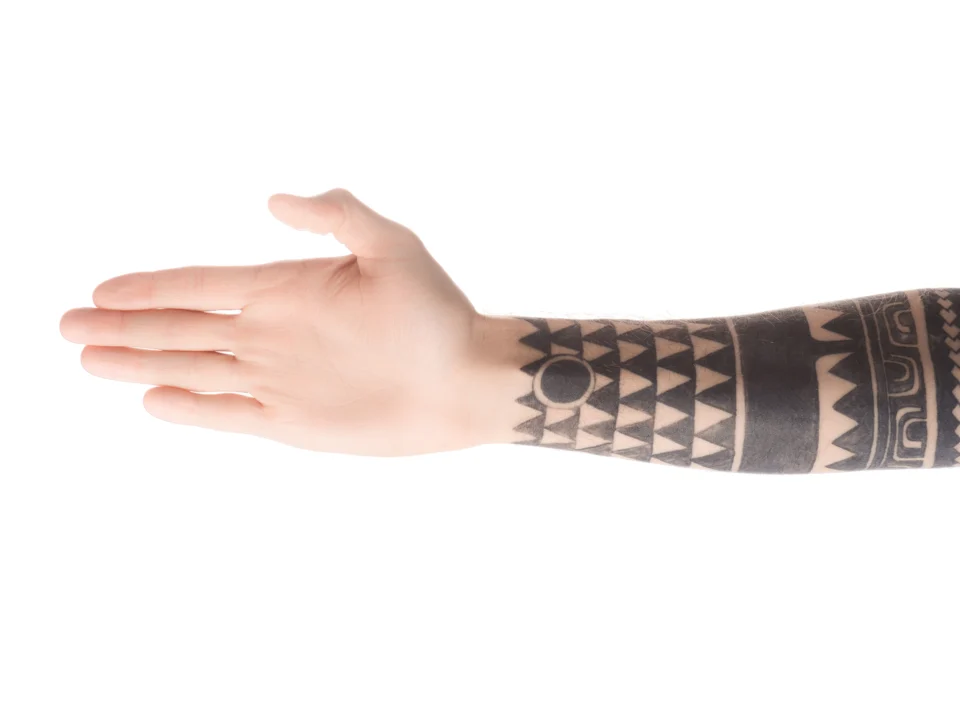
Hawaiian Tattoos and Modern Tattoo Compositions
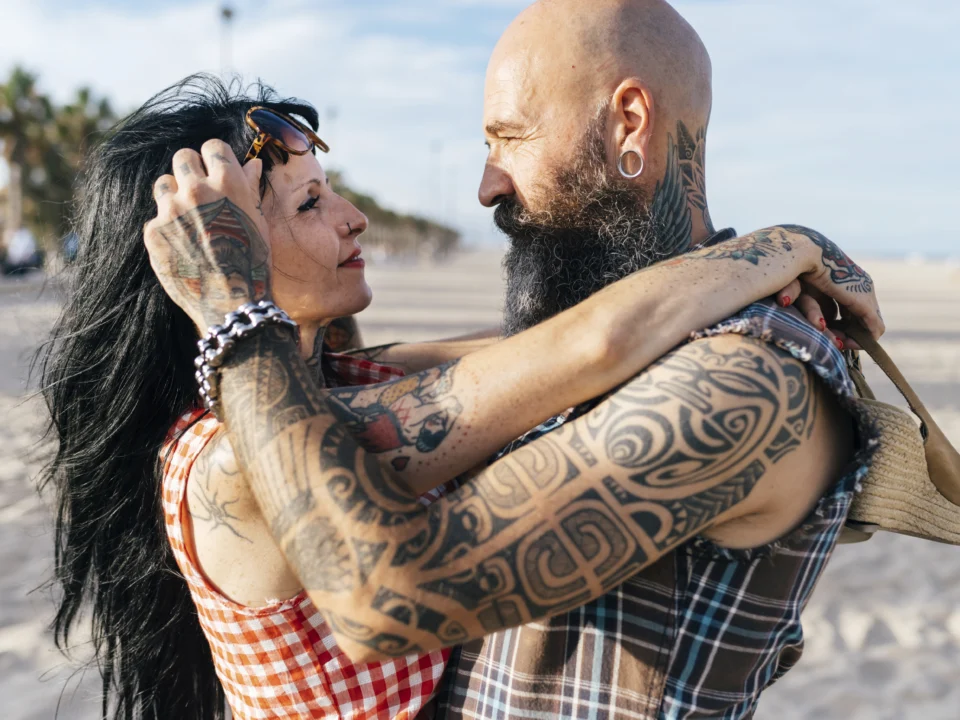
Many collectors combine Hawaiian symbolism with contemporary tattoo formats — patchwork sleeves, mixed-style compositions, and large-scale body art projects. Hawaiian wave patterns, tribal linework, and botanical elements all integrate naturally into sleeve compositions as both primary subjects and structural filler elements.
For collectors building Hawaiian-inspired sleeves, the compositional challenge is creating visual flow between individual symbolic pieces. Our guides to tattoo filler ideas for patchwork sleeves and tattoo filler ideas for sleeve compositions cover the specific techniques that work best for connecting Hawaiian-style pieces into a unified whole.
Cultural Considerations Before Getting a Hawaiian Tattoo
Hawaiian tattoos carry living cultural meaning — they are not purely historical artifacts. The Hawaiian cultural renaissance of the 1970s and beyond, documented by Britannica’s Hawaii cultural overview, saw a significant resurgence of interest in traditional tattooing as a form of cultural identity and ancestral connection. This makes cultural awareness particularly important for non-Hawaiian collectors considering Hawaiian tattoo designs.
Before committing to a Hawaiian tattoo design, consider the following:
- Research the specific symbol’s meaning — not all Hawaiian symbols carry the same cultural weight; some are widely shared, others are rank or lineage-specific
- Work with an artist who understands the tradition — Polynesian tattoo artists with cultural knowledge will guide you toward designs that are appropriate for your background and intention
- Avoid combining symbols randomly — in Hawaiian tradition, symbol combinations carry specific meaning; random combination can produce compositions that are culturally contradictory
- Consider placement carefully — some body areas carry specific cultural significance in Hawaiian tradition that may be worth discussing with a culturally knowledgeable artist
A Hawaiian tattoo isn’t just ink on skin — it’s a story rooted in culture, respect, and identity. When chosen with understanding, it becomes a timeless piece that carries meaning for life.
👉 Tattoo Filler Ideas for Patchwork Sleeves
👉 Geometric Tattoo Filler Ideas
👉 Tattoo Filler Ideas for Small Gaps
👉 Half Sleeve Tattoo Ideas for Men
What do Hawaiian tattoos mean?
Hawaiian tattoos carry meanings rooted in cultural identity, ancestry, spiritual protection, and personal milestones. Each symbol has specific significance — the Honu turtle represents longevity and family protection; wave patterns symbolize strength and respect for the ocean; shark tooth (Niho Mano) patterns represent warrior courage and protection; the Gecko (Moʻo) signifies spiritual awareness and good fortune. In traditional Hawaiian culture, every line and pattern carried intentional meaning connected to the wearer’s identity and life history.
What is the most common Hawaiian tattoo symbol?
The Hawaiian sea turtle (Honu) is the most widely recognized Hawaiian tattoo symbol. It represents longevity, protection, peace, family unity, and safe passage. In Hawaiian culture, the Honu is considered an aumakua — an ancestral spirit guardian — making it one of the most spiritually significant symbols in the tradition. Other widely used symbols include shark tooth (Niho Mano) patterns, wave designs, and hibiscus flowers.
What does the Hawaiian turtle tattoo symbolize?
The Hawaiian Honu turtle tattoo symbolizes longevity, protection, peace, safe passage, and family unity. In Hawaiian spiritual tradition, sea turtles are aumakua — ancestral spirit guardians that watch over and guide their descendants. Because turtles navigate vast ocean distances yet always return home, they also represent the endurance of family bonds and the constancy of home across distance and time.
Are Hawaiian tattoos cultural or religious?
Hawaiian tattoos are primarily cultural but carry significant spiritual meaning. They represent heritage, ancestral connection, and personal identity rather than belonging to a single organized religion. In Hawaiian tradition, the spiritual dimension of tattooing is inseparable from its cultural role — tattoos were believed to carry protective spiritual power and to maintain connection between the living and their ancestral guardians (aumakua).
Can non-Hawaiians get Hawaiian tattoos?
Yes — non-Hawaiians can respectfully incorporate Hawaiian tattoo symbols, but cultural awareness matters. The key considerations are understanding the specific meaning of each symbol before using it, avoiding rank-specific or sacred designs without cultural knowledge, working with an artist who understands the tradition, and not combining symbols randomly (as symbol combinations carry specific meanings in Hawaiian culture). Hawaiian symbols used with genuine understanding and respect honor the tradition rather than appropriate it.
What is the difference between Hawaiian and Polynesian tattoos?
Polynesian tattooing is a broader cultural tradition shared across Pacific island groups including Samoa, Tonga, Tahiti, and Hawaii. Hawaiian tattoos are a specific branch of this tradition, rooted in Hawaiian island history, symbols, and spiritual beliefs. While all Hawaiian tattoos are Polynesian in their broader cultural context, not all Polynesian tattoos are Hawaiian — each island group developed distinct pattern vocabularies, symbol systems, and cultural protocols specific to their own ancestral traditions.
Do Hawaiian tattoos have spiritual meaning?
Yes — traditional Hawaiian tattoos carry deep spiritual meaning. Many designs were historically believed to provide literal spiritual protection, to maintain connection between the living and ancestral guardians (aumakua), and to mark the wearer’s spiritual status within the community. The Honu, Mano (shark), and Moʻo (gecko) are all aumakua forms — animal manifestations of ancestral spirits believed to actively guide and protect their descendants.





I’ve been interested in Hawaiian tattoos and meanings for a while, and this article made everything much easier to understand. Learning about the cultural significance and symbolism behind common Hawaiian tattoo designs helped me decide what style resonates with me most. Very helpful for tattoo inspiration and meaning research.
I was curious about Hawaiian tattoos and meanings and this guide made everything easy to understand. I love learning the meaning behind Hawaiian tattoo symbols before choosing a design. Really inspiring article.
I was researching Hawaiian tattoos and meanings and this article gave a clear explanation of traditional Hawaiian tattoo symbolism. The breakdown of Hawaiian tattoo meanings, cultural elements, and design ideas helped me understand how important each symbol is. Great guide for anyone exploring Hawaiian tattoo ideas and meanings before getting inked.