
Gap Filler Tattoo Ideas: Creative Tattoo Fillers for Empty Spaces
Gap filler tattoo ideas are the compositional solution to one of tattooing’s most common challenges: the irregular empty spaces that appear between larger tattoos in a sleeve or body composition. These gaps are a natural consequence of building tattoos over time — each piece is placed independently, and the spaces between them rarely form clean, usable shapes. The right gap filler closes those spaces, creates visual flow between unrelated designs, and transforms a collection of individual tattoos into a unified composition. This guide covers the most effective gap filler styles, where they work best, and how to choose the right design for your specific sleeve.
Table Of Content
- Why Gap Filler Tattoos Matter in Sleeve Composition
- Best Gap Filler Tattoo Ideas by Style
- Small Symbol Gap Fillers
- Smoke and Shading Gap Fillers
- Geometric Gap Fillers
- Dotwork Gap Filler Designs
- Linework Connector Fillers
- Gap Fillers for Tattoo Sleeves
- How to Choose the Right Gap Filler Tattoo
- About the Author
- What is a gap filler tattoo?
- What are the most popular gap filler tattoo ideas?
- Do gap filler tattoos have to match the existing sleeve style?
- Can gap fillers be added to a sleeve later?
- How do I choose the right gap filler for my sleeve?
- Are gap filler tattoos necessary for sleeves?



Why Gap Filler Tattoos Matter in Sleeve Composition
Gap fillers do far more than occupy empty skin. Used correctly, they shape the visual rhythm of an entire sleeve — creating the impression that the composition was designed as a whole rather than assembled piece by piece over months or years.
The three primary compositional functions of gap filler tattoos are flow, depth, and negative space management.
Flow — gap fillers guide the viewer’s eye naturally between major tattoo elements. Without them, the eye stops and restarts at each design boundary. With the right filler, visual momentum carries continuously across the sleeve from one piece to the next.
Depth and texture — background fillers like smoke shading, dotwork clusters, and soft stippling add dimensional depth that gives the sleeve visual weight and atmosphere. These elements work best when they recede visually — present but not competing with the main tattoos for attention.
Negative space management — not every gap requires a filler, and good filler selection includes the judgment to leave some spaces open. Understanding how negative space functions in visual composition — as documented in the Getty Museum’s formal analysis guide — helps distinguish gaps that need filling from spaces that contribute intentionally to the sleeve’s visual balance.
Best Gap Filler Tattoo Ideas by Style
Small Symbol Gap Fillers
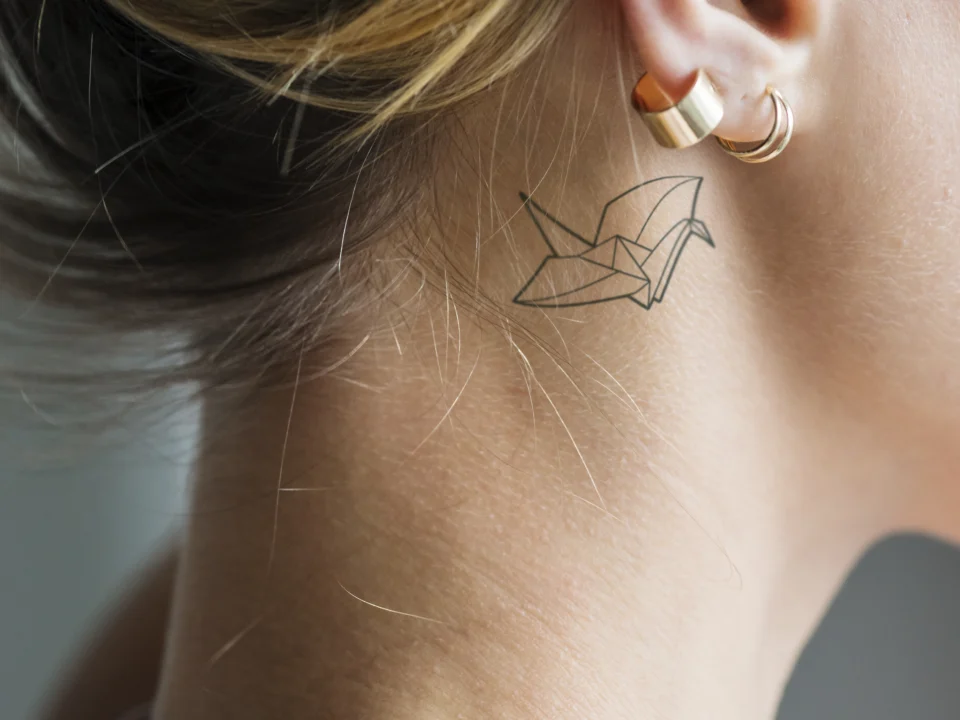
Small symbol fillers are the most versatile gap filler category. Stars, dots, tiny crosses, minimalist arrows, crescent moons, and small diamonds all scale to almost any gap size and fit naturally into irregular spaces that resist more structured filler designs.
Their visual neutrality makes them compatible with virtually every surrounding tattoo style — a micro star works equally well next to a traditional rose, a geometric mandala, or a fine line portrait. Scatter arrangements create directional movement across the sleeve; tight groupings anchor a specific transition zone between two larger pieces.
Smoke and Shading Gap Fillers
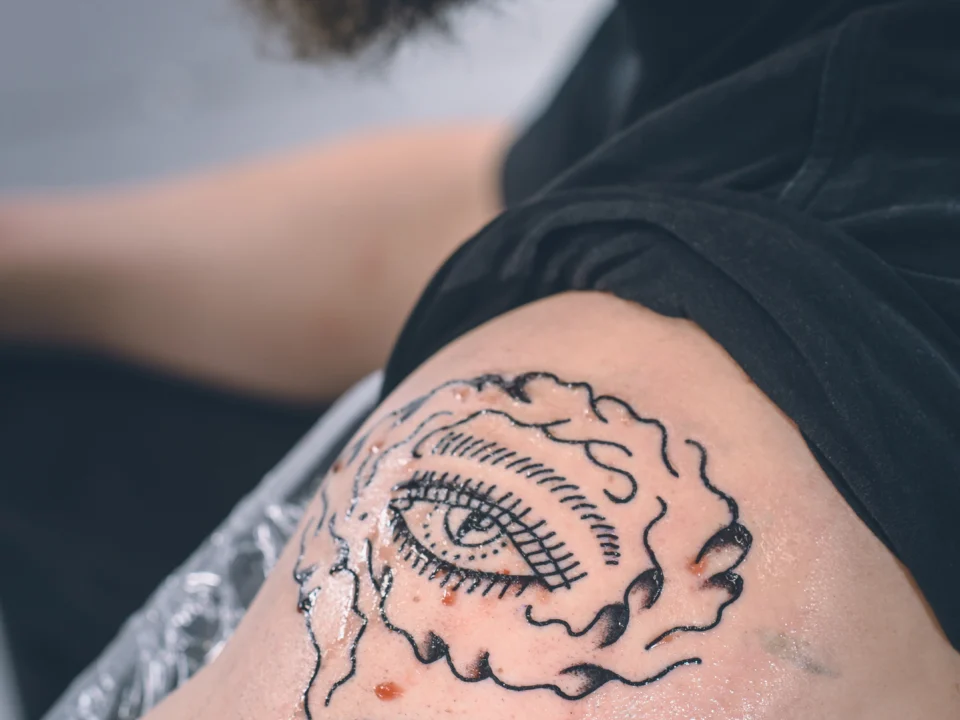
Smoke and background shading are the most effective gap filler options for medium-to-large spaces where micro symbols would look insufficient. Soft smoke creates directional flow, produces natural dark-to-light transitions, and adds atmospheric depth that complements black and grey realism, Japanese-style, and neo-traditional sleeves particularly well.
Smoke fillers also serve as connective tissue between two otherwise unrelated tattoos — the directional quality of smoke draws the eye across the gap naturally, creating the visual impression of compositional intention even between pieces added years apart. Japanese wind bars (fūjin-style linework) are a refined variation that adds cultural consistency to Japanese-themed sleeves.
Geometric Gap Fillers
Geometric gap fillers add structural visual elements to sleeve compositions — mandalas, hexagon outlines, sacred geometry fragments, triangle compositions, and linework grids all provide ordered pattern elements that complement both organic and geometric main tattoos.
Geometric fillers work best in sleeves where the surrounding tattoos already contain geometric elements — introducing strong geometric structure next to purely organic or illustrative work can create visual inconsistency. At smaller scales, geometric micro accents (single triangles, small hexagons, linework circles) integrate more neutrally across mixed-style compositions.

Dotwork Gap Filler Designs
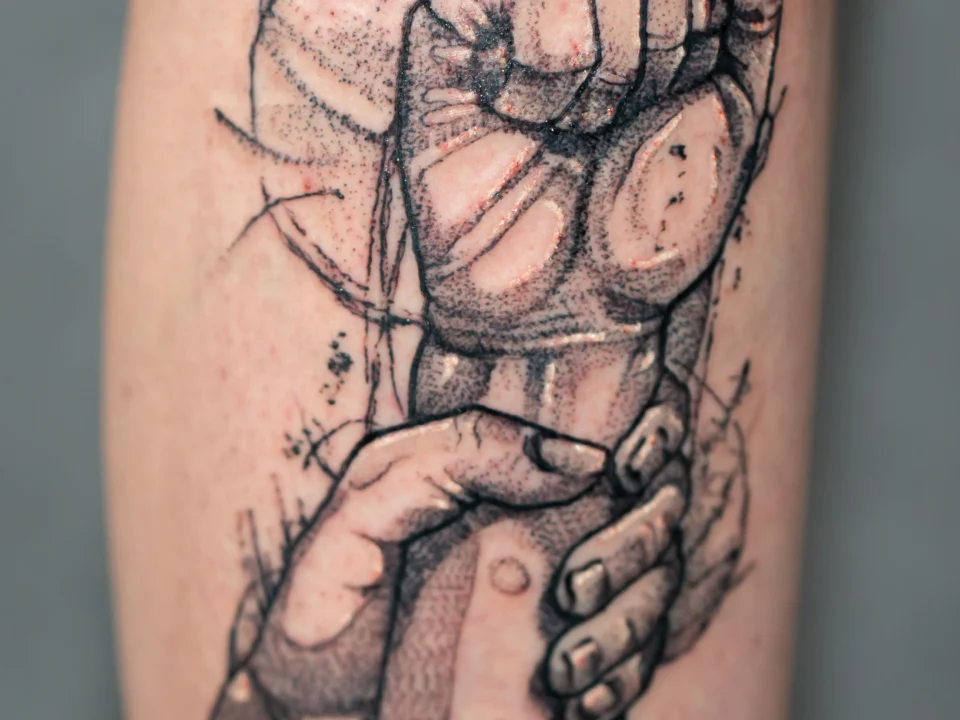
Dotwork is the most subtle gap filler option available. Dot clusters and stippling patterns add background texture and gradient shading without introducing any recognizable subject matter that might compete with surrounding designs. This makes dotwork particularly effective as a background-layer filler in densely tattooed sleeves where compositional clarity is already high.
Dotwork trails — clusters that graduate in density from larger dots near the tattoo edge to single dots further away — create a natural fading effect that softens hard tattoo borders. This is especially useful between black and grey realism pieces and lighter skin areas, and for elbow transition zones where the irregular surface makes other filler types difficult to execute consistently.

Linework Connector Fillers
Thin flowing linework connectors are among the most versatile transitional gap fillers available. Parallel lines, flowing curves, connecting arcs, wave patterns, and fine line spirals all create directional visual movement that guides the eye between tattoo sections without introducing new subject matter into the composition.
Linework connectors are best designed custom for the specific gap they are filling — the shape of the negative space and the edges of surrounding tattoos dictate the linework direction. These are among the most artist-dependent filler types; their effectiveness depends entirely on how well the artist understands the sleeve’s compositional logic and can translate that understanding into a custom transitional element.
Gap Fillers for Tattoo Sleeves
Sleeves benefit more from strategic gap filler placement than any other tattoo format. The challenge with sleeve compositions is that individual pieces are added over time without a fixed endpoint — each new tattoo creates new gaps, and the available negative space changes shape with every session.
The most effective approach is to plan filler zones in advance — during the initial sleeve consultation rather than after all the main pieces are placed. An artist who understands the full compositional direction from the start can position each anchor piece in a way that creates manageable, filler-friendly gaps rather than awkward irregular spaces that are difficult to address later.
For sleeve-specific filler planning and design direction, see our complete guide to tattoo filler ideas for sleeve compositions. For patchwork layouts specifically, our guide to tattoo filler ideas for patchwork sleeves covers the design strategies that work best when individual tattoos were placed without a unified compositional plan.

How to Choose the Right Gap Filler Tattoo
Effective gap filler selection requires matching the design to the sleeve’s existing visual language — not simply filling available space with something that fits the gap shape. A filler that looks appealing in isolation can create compositional conflict when placed next to the surrounding tattoos.
- Match line weight to surrounding tattoos — a fine line filler next to a bold traditional piece creates visual inconsistency; consistent line weight across all elements is the primary marker of a well-composed sleeve
- Match style to the sleeve’s dominant aesthetic — traditional sleeves suit stars, roses, and daggers; Japanese sleeves benefit from wind bars, smoke, and wave patterns; geometric sleeves suit mandala fragments and linework grids; realism sleeves work best with dotwork and soft shading
- Scale the filler to the gap — oversized fillers overpower surrounding tattoos; undersized fillers disappear and leave the gap looking unfilled; the filler must be proportionally appropriate to the available space
- Respect intentional negative space — not every gap needs a filler; assess whether the gap disrupts the sleeve’s visual flow before filling it; some open space is compositionally valuable
- Design with the artist, not from reference images — the most effective gap fillers are designed custom for the specific space and surrounding context; a reference image can provide direction, but the final design should respond to the actual shapes present in the sleeve
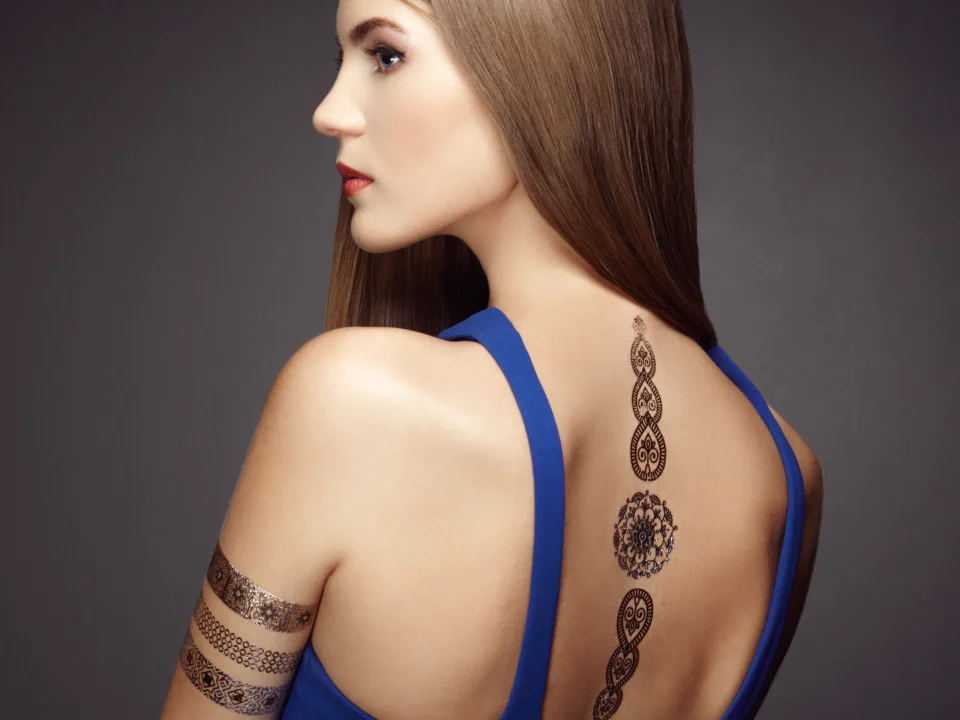
A well-placed gap filler tattoo doesn’t steal attention — it quietly strengthens the entire composition.
About the Author
Jessica Reed is a tattoo research writer and content specialist at TattooFillerIdeas.com, covering tattoo styles, placement guides, and design inspiration. View all articles by Jessica Reed →
👉 Tattoo Filler Ideas for Sleeve
👉 Tattoo Filler Ideas for Patchwork Sleeves
👉 Tattoo Filler Ideas for Small Gaps
👉 Geometric Tattoo Filler Ideas
What is a gap filler tattoo?
A gap filler tattoo is a design specifically chosen and placed to fill the irregular empty spaces that appear between larger tattoos in a sleeve or body composition. Gap fillers serve a compositional function — they improve visual flow between unrelated pieces, add background texture and depth, and balance negative space so the overall sleeve reads as a unified composition rather than a collection of separate tattoos. Common gap filler types include smoke shading, micro stars, dotwork clusters, geometric accents, and fine linework connectors.
What are the most popular gap filler tattoo ideas?
The most popular gap filler tattoo ideas are smoke and cloud shading, micro stars and sparkle clusters, dotwork and stippling patterns, geometric accents (mandalas, hexagons, sacred geometry fragments), fine linework connectors, and small symbol designs (crosses, moons, arrows, dots). Smoke shading is the most requested for medium-to-large gaps; micro stars are the most versatile for small gaps of almost any shape. The best choice depends on the surrounding tattoo styles and the gap’s size and position within the sleeve.
Do gap filler tattoos have to match the existing sleeve style?
Stylistic consistency is the most important factor in gap filler selection. A filler with heavy black outlines placed next to a fine line tattoo creates visual tension rather than harmony. The filler should match the line weight, shading style, and visual language of the surrounding tattoos. Traditional sleeves suit traditional fillers (stars, roses, daggers). Japanese sleeves suit smoke, wind bars, and wave patterns. Geometric sleeves suit mandala fragments and linework grids. Realism sleeves work best with dotwork and soft shading.
Can gap fillers be added to a sleeve later?
Yes — and for most sleeves, this is the recommended approach. Completing the main anchor pieces first gives a clearer picture of where compositional gaps exist and what filler scale and style will work best within the existing layout. Adding fillers reactively after the main tattoos are healed is standard practice. The important consideration is ensuring the filler’s line weight and technique are consistent with the healed surrounding tattoos, which may have softened slightly from their original freshness.
How do I choose the right gap filler for my sleeve?
Match the filler to the sleeve’s visual language by identifying three things: the dominant line weight in surrounding tattoos, the shading style (solid fill, tonal shading, dotwork, or linework), and the aesthetic direction (traditional, Japanese, geometric, realism, or mixed). Then select a filler that is consistent with all three. Scale the filler to the available space — oversized fillers overpower surrounding tattoos, while undersized ones disappear. Work with your artist to design the filler custom for the specific gap rather than adapting a reference image.
Are gap filler tattoos necessary for sleeves?
Not mandatory — intentional negative space is a legitimate compositional choice, and some of the strongest sleeves deliberately preserve open skin between pieces. The question to ask is whether a specific gap disrupts the sleeve’s visual flow or creates an awkward dead zone that draws the eye. If yes, a gap filler addresses that specific compositional problem. If the negative space feels balanced and the eye moves naturally between pieces without stopping, leaving it unfilled is often the better decision.





Great inspiration for closing awkward spaces in my sleeve. The gap filler ideas you shared really help make a tattoo feel complete and balanced.
These gap filler tattoo ideas are exactly what I needed! Small symbols and subtle shading make all the difference when tying pieces together.