Can You Do Laser Hair Removal Over Tattoos? What You Need to Know
Can you do laser hair removal over tattoos? The answer is no — and understanding why matters for both your skin and your ink. This guide explains the science behind the risk, what happens when the rules are ignored, and the safest alternatives available for tattooed skin.
Table Of Content
- Why Laser Hair Removal Cannot Be Done Over Tattoos
- What Happens If Laser Hair Removal Is Done Over a Tattoo?
- Can Laser Hair Removal Be Done Around Tattoos?
- Does Laser Hair Removal Fade or Damage Tattoos?
- Safe Hair Removal Alternatives for Tattooed Skin
- Can You Do Laser Hair Removal Over Tattoos Skin
- Shaving
- Trimming
- Electrolysis
- Waxing
- What to Do If You Have Both Tattoos and Want Laser Hair Removal
- Reviewed by Jessica Reed
- Can laser hair removal remove tattoos?
- Is it safe to do laser hair removal over small tattoos?
- Can tattooed skin ever be treated with lasers?
- Why do clinics refuse laser hair removal on tattoos?
- What is the safest hair removal method for tattooed skin?
- About the Jessica R.

Why Laser Hair Removal Cannot Be Done Over Tattoos
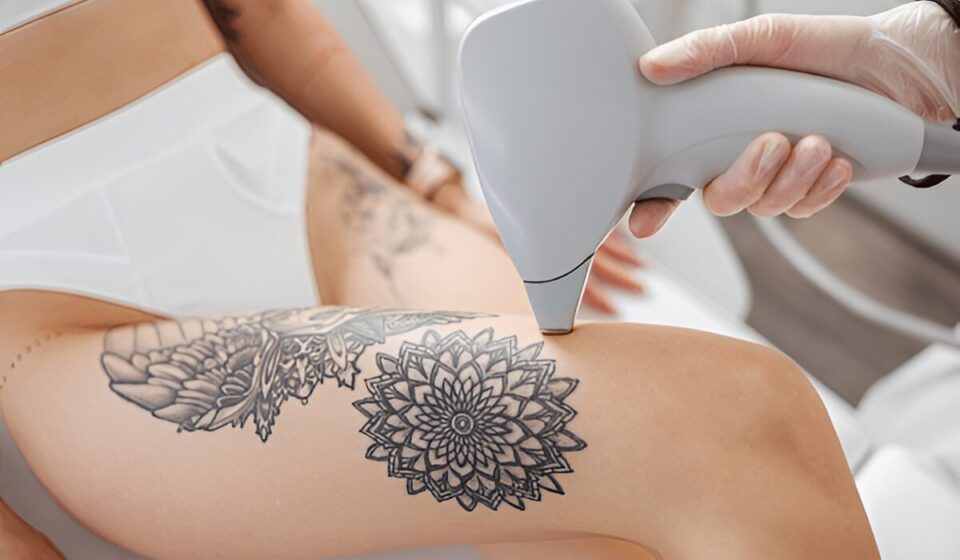
Laser hair removal works by targeting melanin — the pigment found in hair follicles. The laser emits a specific wavelength of light that is absorbed by dark pigment, converting it to heat and destroying the follicle.
The problem is that tattoo ink is also made of concentrated pigment — often darker and more densely packed than natural hair. When a hair removal laser passes over tattooed skin, it cannot distinguish between the two pigment sources. The tattoo ink absorbs the laser energy just as aggressively as the hair follicle, causing a rapid and uncontrolled heat reaction in the skin.
This is not a theoretical risk. It is the primary reason professional laser clinics categorically refuse to treat tattooed skin during hair removal sessions. The U.S. Food and Drug Administration (FDA) regulates both tattoo inks and laser devices, and distinguishes clearly between the laser types approved for hair removal versus those cleared for tattoo removal — they are not interchangeable.
Laser hair removal and tattoos don’t mix — protecting your skin and ink should always come first.

What Happens If Laser Hair Removal Is Done Over a Tattoo?
Applying a hair removal laser directly to tattooed skin triggers a concentration of heat energy in the ink-saturated dermis. The consequences range from uncomfortable to permanently damaging:
- Burns and blistering — the most immediate risk; the skin surface can blister within seconds of laser contact
- Permanent scarring — deep thermal damage can alter the skin’s structure in ways that do not heal fully
- Tattoo ink discoloration or fading — colors shift, blur, or disappear unevenly, often in ways that cannot be corrected
- Increased infection risk — compromised skin is vulnerable to bacterial entry, especially in aftercare
- Significantly elevated pain — the heat absorption in tattooed skin is far more intense than in untreated skin
Reputable laser technicians always cover or skip tattooed areas entirely during treatment. If a clinic does not follow this protocol, that is a serious professional red flag.

Can Laser Hair Removal Be Done Around Tattoos?
Yes — with appropriate precautions, laser hair removal can be safely performed on skin adjacent to tattoos, provided the tattooed area itself is avoided.
Standard clinical protocol for treating near tattoos includes:
- Marking a clear safety margin (typically 1–2cm) around the tattoo border
- Applying a protective covering over the tattooed skin before treatment begins
- Adjusting laser settings conservatively near the tattoo’s edges
- Skipping any area where ink visibility could cause confusion during treatment
Hair that grows directly over or within the tattooed area itself will remain untreated — this is a known limitation that cannot be fully resolved with laser hair removal.

Does Laser Hair Removal Fade or Damage Tattoos?
Hair removal lasers are not designed to remove tattoos — but they can cause significant unintended damage to tattoo ink when used incorrectly over tattooed skin.
The wavelengths used in hair removal lasers (typically 755nm Alexandrite or 810nm diode) partially overlap with wavelengths that affect certain tattoo ink colors. Even indirect exposure near the tattoo’s edge can cause:
- Fading of lighter ink colors (yellows, greens, light blues)
- Blurring or softening of fine line details
- Uneven color shifts across the tattooed area
Tattoo removal uses entirely different laser technology — specifically Q-switched or picosecond lasers operating at different wavelengths and pulse durations. These are regulated separately by the FDA and are not the same devices used in hair removal clinics. You can read more about the cost of professional tattoo removal and what the process involves.

Safe Hair Removal Alternatives for Tattooed Skin
Can You Do Laser Hair Removal Over Tattoos Skin
For hair growing directly over tattoos, several effective alternatives exist that carry no risk to the ink or the surrounding skin.
Shaving
The safest and most straightforward option. A sharp, clean razor removes surface hair without affecting the dermis or tattoo pigment. Use a gentle, fragrance-free shaving gel over tattooed skin to minimize irritation.
Trimming
Electric trimmers keep hair short without contact with the skin surface. This is particularly useful for larger tattooed areas where frequent shaving is impractical.
Electrolysis
Electrolysis targets individual hair follicles using an electric current rather than light energy. Because it does not rely on melanin absorption, it does not interact with tattoo ink in the same way laser does. It is the only FDA-recognized method for permanent hair removal and can be used over tattooed skin on a case-by-case basis — always consult a licensed electrologist before proceeding.
Waxing
Waxing is generally safe over healed tattoos, but requires caution. Avoid waxing over a fresh tattoo (under 6–8 weeks old), as the skin is still healing. For established tattoos, use a low-temperature wax and perform a patch test first. Waxing removes hair from the root but does not affect the dermis where tattoo ink is deposited.
Always consult a licensed professional before choosing a hair removal method for tattooed skin. If you are planning a new tattoo and also want laser hair removal in the same area, the recommended approach is to complete the laser sessions first, allow full healing, and then get tattooed afterward.
What to Do If You Have Both Tattoos and Want Laser Hair Removal
Having tattoos does not prevent you from getting laser hair removal — it just requires a clear treatment plan that accounts for where your tattoos are located.
Before your first session, discuss the following with your laser technician:
- The exact location and borders of all tattoos in the treatment area
- The safety margins the clinic uses around tattooed skin
- Whether hair within the tattoo will remain untreated and what alternatives exist for that area
- The technician’s specific experience treating clients with tattoos
A qualified technician will map the treatment zone carefully and adjust the session plan accordingly. Any clinic that claims laser hair removal over tattoos is safe should be approached with serious skepticism.
For those considering tattoo removal alongside other skin procedures, it helps to understand what tattoo removal looks like before and after, and how many sessions a full removal typically requires. You can also read about how much laser tattoo removal costs to plan appropriately.
Reviewed by Jessica Reed
Tattoo Research Contributor | Body Art & Design Specialist
Jessica Reed has spent more than a decade researching tattoo design trends, tattoo symbolism, placement strategies, tattoo aging, and artist techniques across multiple styles including fine line, blackwork, traditional, realism, and contemporary tattooing.
Her research combines information from professional tattoo artists, dermatology organizations, tattoo history resources, and long-term tattoo aging studies to help readers choose designs that remain visually successful for years to come.
Areas of expertise include:
• Tattoo design selection and planning
• Fine line and minimalist tattoo trends
• Tattoo placement strategy
• Tattoo aging and longevity
• Tattoo aftercare and maintenance
• Symbolism and cultural tattoo meanings
Last Updated: July 2026
Laser hair removal and tattoos don’t mix because both rely on pigment — causing the laser to target the tattoo instead of just the hair.
👉 Laser Tattoo Removal How Much
👉 Tattoo Removal Before and After
👉 Does Numbing Cream Work for Tattoo?
Can laser hair removal remove tattoos?
No. Laser hair removal devices operate at wavelengths and pulse durations designed to target hair follicles, not tattoo ink. Using them over tattoos does not remove the ink — it damages both the ink and the surrounding skin. Tattoo removal requires entirely different laser technology, specifically Q-switched or picosecond lasers, which are regulated and classified separately by the FDA.
Is it safe to do laser hair removal over small tattoos?
No — tattoo size does not change the risk. Even a small tattoo contains concentrated pigment in the dermis that will absorb laser energy and cause burns, blistering, or ink damage. Clinics should avoid all tattooed skin during hair removal treatment, regardless of tattoo size or color.
Can tattooed skin ever be treated with lasers?
Yes, but only with tattoo removal lasers — not hair removal lasers. The FDA has cleared specific Q-switched and picosecond laser devices for tattoo lightening and removal. These devices use different wavelengths, pulse durations, and treatment protocols than hair removal equipment and must be operated by or under the supervision of a qualified health care professional.
Why do clinics refuse laser hair removal on tattoos?
Professional clinics refuse to treat tattooed skin because the risk of burns, permanent scarring, and tattoo damage is well-established. Hair removal lasers target melanin — the same pigment found in tattoo ink — making it impossible for the device to distinguish between hair and ink. This is considered unsafe clinical practice, and reputable technicians will not perform the procedure regardless of client request.
What is the safest hair removal method for tattooed skin?
Shaving and trimming are the safest options for hair growing directly over tattoos, as they do not interact with the dermis where tattoo ink is located. Electrolysis is the only method that offers permanent hair reduction without relying on melanin absorption, making it compatible with tattooed skin when performed by a licensed professional. Waxing is also generally safe over fully healed tattoos with appropriate precautions.





This article was super helpful in answering my top question: Can you do laser hair removal over tattoos? I’ve been researching whether laser hair removal is safe on tattooed skin and what limitations there might be, and your explanation of how laser hair removal interacts with tattoo ink and skin was clear and educational. The breakdown of risks, precautions, and why certain tattoo colors matter made it much easier to understand the process and plan ahead. If you’re looking for accurate information about laser hair removal over tattoos and safety tips before booking treatment, this is one of the best guides I’ve come across.
I came across this article while trying to figure out can you do laser hair removal over tattoos because I have tattooed areas where I also want hair removal. I was worried about safety and possible damage, but the way this guide explains how laser hair removal works on tattooed skin really put things into perspective. Learning why laser treatment shouldn’t be done directly over tattoos and what alternatives exist helped me feel more confident before talking to a clinic. Really useful info for anyone in the same situation.